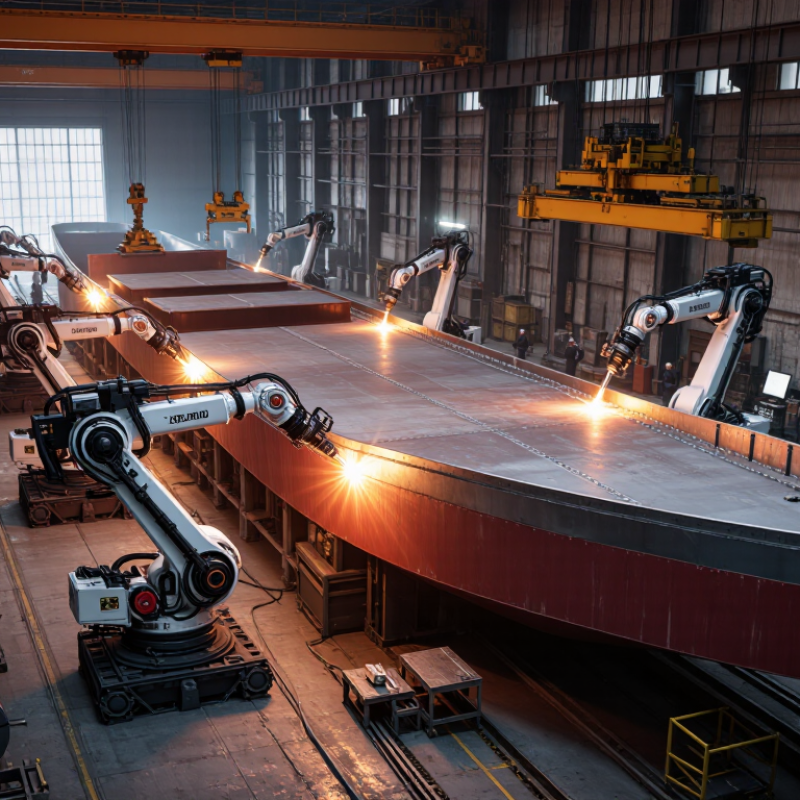
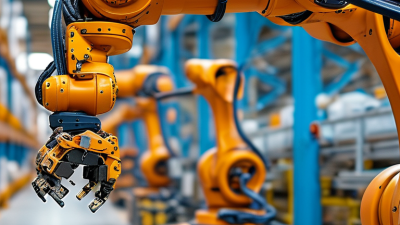
| Six-Axis Articulated Arc-Welding Cell |
Fillet and butt welds on steel panels, brackets, stiffeners, frames, and small-to-medium subassemblies.
|
Approximately 1.4–3.0 m arm reach; optional linear tracks can extend coverage across several meters.
|
Approximately 6–20 kg at the wrist, depending on the torch, cable package, and process equipment.
|
Gas metal arc welding, flux-cored arc welding, and pulsed arc welding.
|
- Rigid level foundation and guarded work area.
- Three-phase electrical supply and suitable grounding.
- Shielding-gas distribution, compressed air, fume extraction, and wire-feed equipment.
- Offline programming or teach pendant setup for part-specific paths.
|
- Perimeter guarding with interlocked access doors.
- Safety-rated emergency stops and protective stops.
- Arc-flash protection, welding screens, local exhaust ventilation, and fire prevention controls.
- Risk assessment according to applicable machinery and robot-safety regulations.
|
Inspect torch liners, contact tips, wire-feed rolls, cable dress packs, axis brakes, and grease points. Clean weld spatter regularly and verify TCP calibration after torch changes or collisions.
|
Approximately USD 90,000–250,000 per cell, excluding major building work and taxes. |
Shipyards seeking flexible automation for repeatable subassemblies and medium production volumes.
|
| Robot on Linear Track |
Long weld seams on hull panels, deck sections, bulkheads, stiffener assemblies, and modular ship blocks.
|
Approximately 3–20 m travel on a floor, overhead, or elevated rail; robot reach is commonly 1.4–3.0 m.
|
Approximately 6–20 kg at the wrist, with the track designed for the complete moving mass.
|
Gas metal arc welding, flux-cored arc welding, tandem or twin-wire welding in high-deposition applications.
|
- Precision-aligned rail, strong anchoring, and controlled floor flatness.
- Travel-limit sensors and cable-management systems.
- Accurate workpiece positioning or laser seam-tracking equipment.
- Access for rail cleaning and inspection along the entire travel path.
|
- Guarding must cover the robot and the full track travel zone.
- Safety scanners or light curtains may be used for controlled loading areas.
- Lockout/tagout is required before work inside the travel envelope.
- Special attention is required for crushing and trapping points along the rail.
|
Clean and lubricate the rail, inspect rack-and-pinion or linear-drive components, check alignment, and monitor cable-chain wear. Recalibrate position references after rail movement or foundation work.
|
Approximately USD 180,000–500,000 per system, depending on travel length and sensing equipment. |
Medium and large shipyards with long welds, repeated panel designs, and a need to reduce robot repositioning.
|
| Column-and-Boom Welding System |
Long straight seams on panels, longitudinal stiffeners, deck plates, tanks, and large steel fabrications.
|
Commonly 4–15 m vertical or horizontal boom travel; system dimensions are selected around the workpiece geometry.
|
Commonly 20–100 kg process-equipment capacity, depending on the boom configuration and welding head.
|
Submerged arc welding, tandem submerged arc welding, gas metal arc welding, and flux-cored arc welding.
|
- Heavy structural foundation with verified load capacity.
- Accurate alignment of column, boom, welding head, and workpiece supports.
- Dedicated flux recovery, wire-feed, welding-power, and fume-control systems where applicable.
- Stable fixtures to limit panel distortion during welding.
|
- Guarded movement zones and clearly marked exclusion areas.
- Protection from arc radiation, hot slag, welding fumes, and falling equipment.
- Safe handling procedures for flux, wire reels, and heavy components.
- Emergency stops must be accessible from loading and operating positions.
|
Inspect boom drive systems, vertical slides, welding-head alignment, flux recovery, wire-feeding components, and contact assemblies. Check structural fasteners and travel limits at planned intervals.
|
Approximately USD 150,000–450,000 per system, excluding major fixtures and civil work. |
High-throughput yards producing large panels or long, consistent weld seams.
|
| Gantry or Portal Welding Robot |
Large hull blocks, oversized panels, multi-axis welding of structural assemblies, and operations requiring overhead coverage.
|
Typical portal spans of 5–20 m and longitudinal travel of 10–40 m; exact dimensions are project-specific.
|
Approximately 20–150 kg for the process head and auxiliary equipment, depending on the gantry design.
|
Submerged arc welding, gas metal arc welding, flux-cored arc welding, and multi-wire high-deposition processes.
|
- Engineered foundations, portal columns, rails, and overhead clearances.
- Surveying and alignment of long travel axes before commissioning.
- Large-capacity power distribution, fume extraction, and material-handling access.
- Integration with fixtures, positioners, seam tracking, and production software.
|
- Full-area exclusion zones for overhead and horizontal movement.
- Protection against falling objects, collision, hot work, and unauthorized entry.
- Safety interlocks, travel limit switches, overspeed protection, and emergency stops.
- Permit-to-work controls for maintenance at height or inside the portal.
|
Perform scheduled rail inspections, drive-system checks, alignment surveys, gearbox and bearing inspections, and preventive replacement of cable carriers and high-wear welding components.
|
Approximately USD 400,000–1,500,000 or more, depending on size, axes, fixtures, and integration. |
Large shipyards with high capital capacity, extensive block production, and standardized large-scale workflows.
|
| Two-Station Robotic Welding Cell with Positioner |
Brackets, foundations, pipe supports, small frames, machinery seats, and other repeatable fabricated components.
|
Approximately 1.4–2.5 m robot reach; positioners commonly handle workpieces from several hundred kilograms to multiple tonnes.
|
Approximately 6–20 kg at the wrist; positioner capacity is selected separately for the component weight and center of gravity.
|
Gas metal arc welding, pulsed arc welding, and flux-cored arc welding.
|
- Rigid baseplates, repeatable fixtures, and accessible loading areas.
- Dual-station layout to allow loading while welding continues.
- Welding-power, shielding-gas, compressed-air, and fume-extraction connections.
- Validated programs for each approved fixture and component family.
|
- Interlocked doors or light curtains between loading and welding zones.
- Positioner pinch-point protection and safe fixture design.
- Welding screens, fume extraction, fire watch, and hot-work procedures.
- Operator training for recovery, fixture change, and controlled restart.
|
Check positioner backlash, fixture repeatability, torch alignment, contact-tip wear, wire-feed performance, and safety-device function. Keep approved parameter backups and robot programs under revision control.
|
Approximately USD 130,000–350,000 per cell, excluding specialized fixtures. |
Buyers needing high utilization and quick loading cycles for standardized components.
|
| Mobile or Self-Propelled Welding Robot |
Flexible welding of large structures where permanent cells are impractical, including panels, blocks, and repair or retrofit work.
|
Coverage depends on onboard travel, magnetic or vacuum adhesion, external rails, and the geometry of the workpiece.
|
Commonly 5–20 kg at the wrist; mobility and surface-contact limitations must be evaluated separately.
|
Gas metal arc welding, flux-cored arc welding, and selected mechanized welding processes.
|
- Verified surface condition, slope, access, and load-bearing capacity.
- Reliable power, shielding-gas, communication, and fume-management arrangements.
- Defined operating boundaries and recovery procedures for loss of traction or power.
- Trial runs are required on representative shipyard surfaces and weld positions.
|
- Fall protection is essential when operating on elevated or inclined structures.
- Secondary retention may be required where loss of adhesion could cause a drop.
- Use remote emergency stops, exclusion zones, and collision monitoring.
- Assess heat, fumes, weather exposure, confined spaces, and hot-work hazards.
|
Inspect wheels, magnets or adhesion devices, drive units, batteries or power cables, sensors, torch components, and protective covers. Remove steel debris and weld spatter that could affect traction or sensing.
|
Approximately USD 100,000–300,000 per system, depending on mobility, sensing, and certification requirements. |
Shipyards prioritizing flexible deployment, repair work, or automation of structures that cannot be moved to a fixed cell.
|
| Collaborative Welding Robot Cell |
Low-volume or mixed-model welding of small assemblies where frequent human access and simple product changeovers are required.
|
Commonly 0.8–1.7 m arm reach; practical coverage is limited by collaborative speed, torch access, and workspace layout.
|
Commonly 5–12 kg at the wrist, including the torch and cable package.
|
Gas metal arc welding and pulsed arc welding, subject to the system’s validated safety design.
|
- Stable base, compact fixture, welding-power supply, and local extraction.
- Detailed application risk assessment rather than assuming contact safety.
- Controlled torch, wire, gas, and workpiece setup.
- Validated collaborative operating modes and speed limits.
|
- Collaborative operation does not remove arc-flash, heat, fumes, sharp-edge, or hot-metal hazards.
- Use suitable guarding, scanners, or separation where the risk assessment requires it.
- Protect operators from the welding torch, wire, fixtures, and unexpected restart.
- Provide task-specific training and documented operating procedures.
|
Clean sensors and torch components, inspect collaborative force or power-limiting functions, check fixtures, and verify safety settings after software or tooling changes.
|
Approximately USD 70,000–180,000 per cell, excluding custom fixtures and facility modifications. |
Smaller yards, subcontractors, and production areas with variable parts and limited automation space.
|
|
Cost figures are indicative budgeting ranges in 2026 U.S. dollars for complete robotic welding equipment and typical integration, not firm quotations. Final pricing depends on robot capacity, travel length, welding power source, positioners, fixtures, seam tracking, fume extraction, safety systems, software, installation, training, taxes, shipping, and local engineering requirements. Actual safety design must be validated through a site-specific risk assessment and applicable local regulations.
|