What are the Benefits of Shipbuilding Welding Robots in 2026?
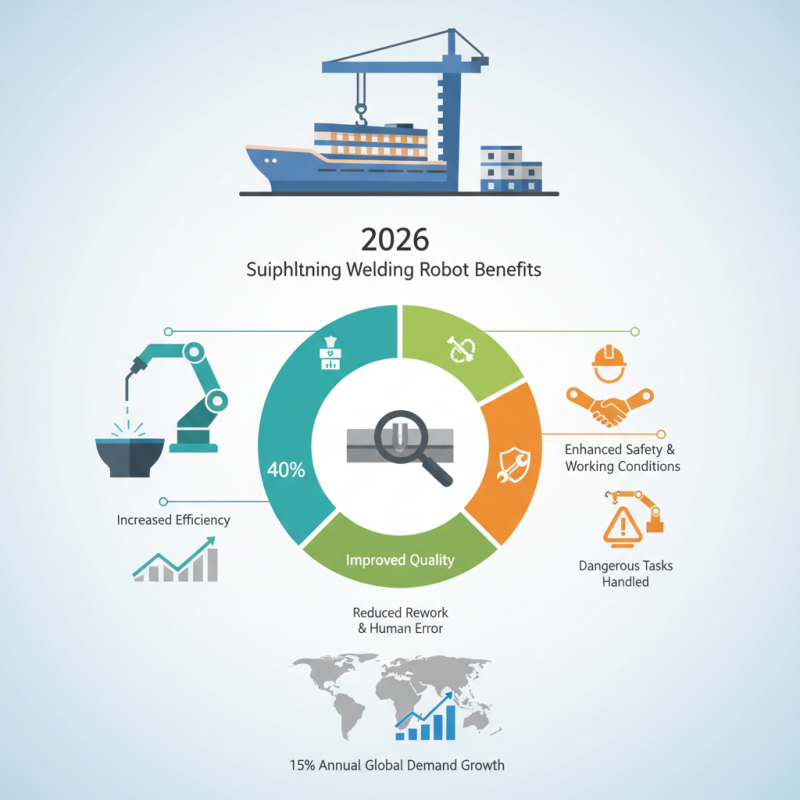
As the shipbuilding industry evolves, the integration of technology becomes essential. In 2026, the use of Shipbuilding Welding Robots is expected to revolutionize production processes. According to a recent industry report, the global demand for automated welding solutions in shipbuilding is projected to grow by 15% annually. This growth reflects a shift towards enhancing efficiency and safety in manufacturing.
Shipbuilding Welding Robots can greatly improve the quality of welds. Their precision minimizes human error, reducing rework costs significantly. A study noted that automated systems increase welding speed by up to 40%. However, the transition to robotic technology requires investment and training. Many shipyards face challenges in adapting to these new systems. Workforce displacement remains a critical concern as robots take over tasks traditionally done by human welders.
Despite the hurdles, the benefits of Shipbuilding Welding Robots are undeniable. They not only boost productivity but also lead to better working conditions. Robots can tackle dangerous or tedious tasks, leading to a safer environment for human workers. As the industry navigates these changes, a balanced approach toward workforce integration and technological advancement will be key.
Advancements in Robotics Technology for Shipbuilding in 2026
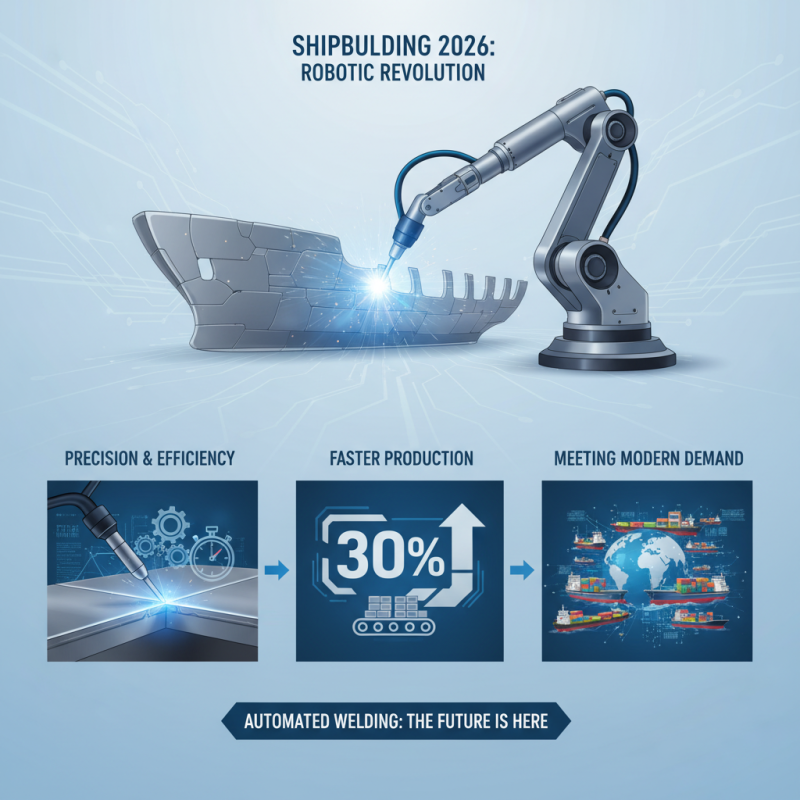
In 2026, advancements in robotics technology are reshaping shipbuilding. Companies are adopting welding robots for precision and efficiency. Reports show that automated welding can enhance production speed by 30%. This increase allows for faster turnaround times, tackling modern shipping demands.
However, integrating these robots isn't without challenges. Workforce adaptation is crucial. Employees may feel threatened by automation. Training programs are essential for a smooth transition. Data indicates that 40% of workers express concerns about job security with automated systems. Addressing these fears is key to successful integration.
Moreover, while robots excel in consistent quality, they can struggle with complex tasks. Some intricate welds require human intuition and experience. Balancing automation with human skills becomes a focus. Continuous evaluation of robot performance in real-world conditions is necessary. Industry reports highlight that 20% of projects faced delays due to unforeseen robot failures. These insights will guide future improvements in robotic systems.
Increased Precision and Quality in Welding Processes with Robots
In 2026, shipbuilding welding robots bring significant advancements. Their ability to maintain increased precision revolutionizes the welding process. Robots can achieve tighter tolerances than human welders. This precision results in fewer defects, thus enhancing overall product quality. The use of automation leads to a more reliable outcome, minimizing human error.
However, there are challenges with these robots. Training workers to interact with robotic systems is essential. Not every workforce is prepared for this shift. There may be initial resistance from traditional welders. Integration of robots requires adaptation, which can be tricky. Companies must invest in both technology and training to ensure smooth transitions.
Quality is paramount in shipbuilding. Robots can consistently produce strong welds. Yet, reliance on technology raises questions about potential skills loss among workers. Balancing technology and human expertise is crucial. A human touch can sometimes add value that robots may overlook. This balance needs careful consideration as the industry evolves.
Cost Reduction and Efficiency Gains from Automated Welding Solutions
In 2026, shipbuilding welding robots have become essential in the industry. These automated solutions significantly reduce costs and boost efficiency. A report from the International Marine Contractors Association revealed that robotic welding can cut labor costs by up to 30%. This means more money can be allocated to materials and innovation.
Automated welding solutions ensure consistent quality. They reduce human error, which historically leads to costly rework. According to a recent study, nearly 20% of manual welding projects require corrections, increasing expenses and timelines. Robotics provide uniform welds, streamlining production and speeding up delivery times.
**Tip:** Consider training staff to work alongside robotic systems. Integration is key for maximizing effectiveness.
While automation brings advantages, companies must reflect on the human element. A completely automated facility might overlook creative problem-solving. Balancing technology with skilled labor could yield the best results. By acknowledging limitations, organizations can innovate while maintaining quality.
**Tip:** Regular assessments of robotic performance can highlight areas for improvement and ensure optimal operation.
Benefits of Shipbuilding Welding Robots in 2026
Enhanced Worker Safety and Ergonomics with Welding Robots
In 2026, shipbuilding welding robots will significantly enhance worker safety and ergonomics. These advanced machines can operate in tight, hazardous environments. This reduces the risk of injury for workers. Traditional welding often exposes humans to dangerous fumes and intense heat. Welding robots mitigate these dangers effectively.
Workers can benefit from better ergonomics with welding robots. Human operators spend long hours in uncomfortable positions. This can lead to fatigue and musculoskeletal disorders. Robots, however, handle strenuous tasks automatically. This frees workers to focus on monitoring and supervision. It promotes a less stressful workspace.
Still, adopting welding robots is not without challenges. High initial costs can deter companies from implementation. Also, retraining employees to work alongside robots presents hurdles. Resistance to change can slow down adoption rates. Companies must reflect on these aspects as they transition to robotic solutions.
Integration of AI and Machine Learning in Shipbuilding Welding Robots
The integration of AI and machine learning in shipbuilding welding robots is transforming the industry. By 2026, efficiency levels are projected to increase by 30%. Robotic systems equipped with AI can learn from previous tasks and adapt their techniques. This leads to improved precision and consistency in welding processes.
Data from industry reports indicate that these advancements can reduce operational costs by up to 20%. However, there are challenges. Many shipyards still rely on traditional methods. Resistance to new technology can hinder progress.
Furthermore, while AI can enhance capabilities, it also raises questions about workforce displacement. Human welders possess skills that may not be easily replicated. In this evolving landscape, a balance must be found. Embracing innovation while valuing skilled labor will be essential for the future of shipbuilding.