Best Robot Arm Motor Options for Efficient Automation Solutions?
In the field of automation, selecting the right Robot Arm Motor is crucial. According to a recent report by MarketsandMarkets, the global robotics market is expected to grow to $130 billion by 2025. This growth highlights the increasing need for efficient and reliable components like motors.
Prominent industry expert Dr. Emily Chen stated, “The choice of motor significantly impacts the performance of robotic arms.” Her insights are essential for understanding the importance of selecting an appropriate motor type. With various options available—stepper motors, servo motors, and DC motors—the decision can be overwhelming. Each type has its strengths and limitations, affecting precision, speed, and overall efficiency.
Interestingly, while companies strive for automation, many face challenges in motor selection. Issues such as cost, compatibility, and performance discrepancies often arise. The right Robot Arm Motor could streamline processes while reducing operational costs. Awareness of these factors will drive the industry toward innovative solutions. Ultimately, making informed choices is vital for optimizing automation efficiency.

Best Robot Arm Motor Types for High-Precision Automation Tasks
When selecting motors for robot arms designed for high-precision automation tasks, it’s crucial to consider multiple factors. Precision is paramount in applications like machining and assembly. Servo motors are frequently favored due to their ability to provide accurate positioning. They operate using closed-loop control systems, which adjust based on feedback. This feedback mechanism ensures that the motor responds instantly to any deviations.
Another option includes stepper motors, which offer good precision without the complexity of servos. They move in discrete steps, allowing for reliable control over position. However, at higher speeds, stepper motors can lose accuracy. This limitation raises questions about their use in demanding environments. For lighter tasks, DC brushed motors may suffice, but they often lack the fine control needed for intricate movements.
The choice of motor directly impacts the overall performance of the robot arm. Each type has its strengths and weaknesses, which require careful analysis. Understanding the specific needs of the task can lead to more effective automation solutions. Exploring novel technologies is also essential as automation continues to evolve. Ultimately, finding the right balance among precision, efficiency, and cost is challenging. It demands continuous learning and consideration of the application requirements.
Comparative Analysis of Stepper vs. Servo Motors in Automation
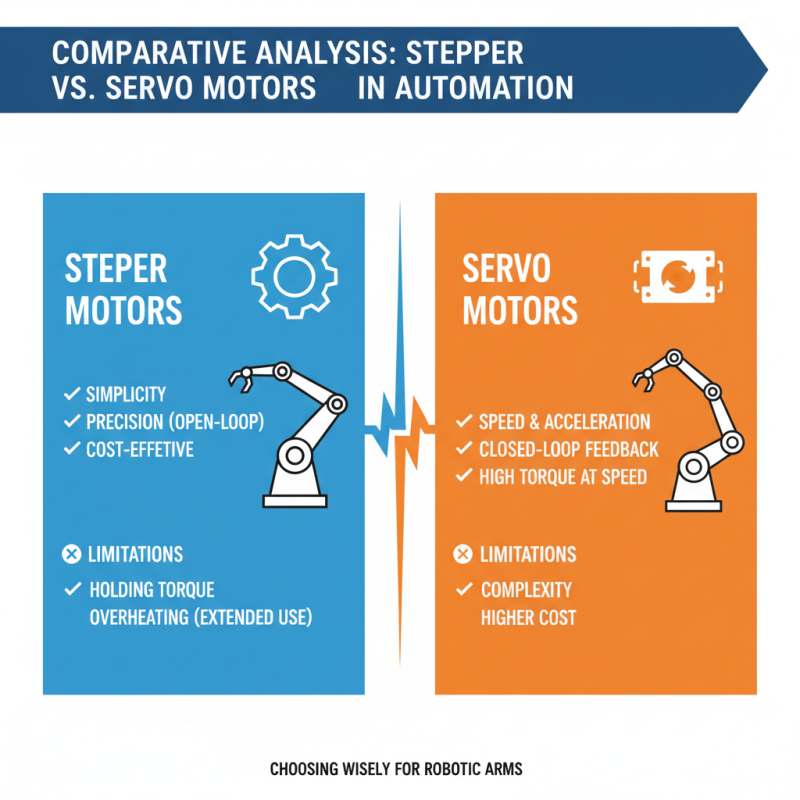
When selecting motors for robotic arms, the choice between stepper and servo motors plays a crucial role. Stepper motors are often favored for their simplicity and precision in open-loop control. They divide rotations into equal steps, which makes them highly accurate for specific tasks. However, they may struggle with holding torque and can overheat during extended use. Understanding these limitations is essential for effective automation solutions.
Servo motors, on the other hand, offer closed-loop control. They continuously adjust to their position, which enhances performance in dynamic situations. Their feedback mechanisms allow for higher efficiency and torque, making them ideal for applications requiring fast response and power. However, this complexity can increase the cost and setup time.
**Tip:** Consider a hybrid approach. Using stepper motors for lighter tasks and servo motors for demanding operations can optimize performance.
Notably, both motor types have specific strengths and weaknesses. Testing them in real-world scenarios is vital. Reflect on the application’s requirements and what potential challenges may arise during operation. Weight, speed, and desired precision should guide your motor choice. Each project may reveal new insights or requirements, prompting you to reassess your initial selections. Keeping this iterative process in mind can lead to more effective automation solutions.
Key Performance Metrics for Selecting Robot Arm Motors
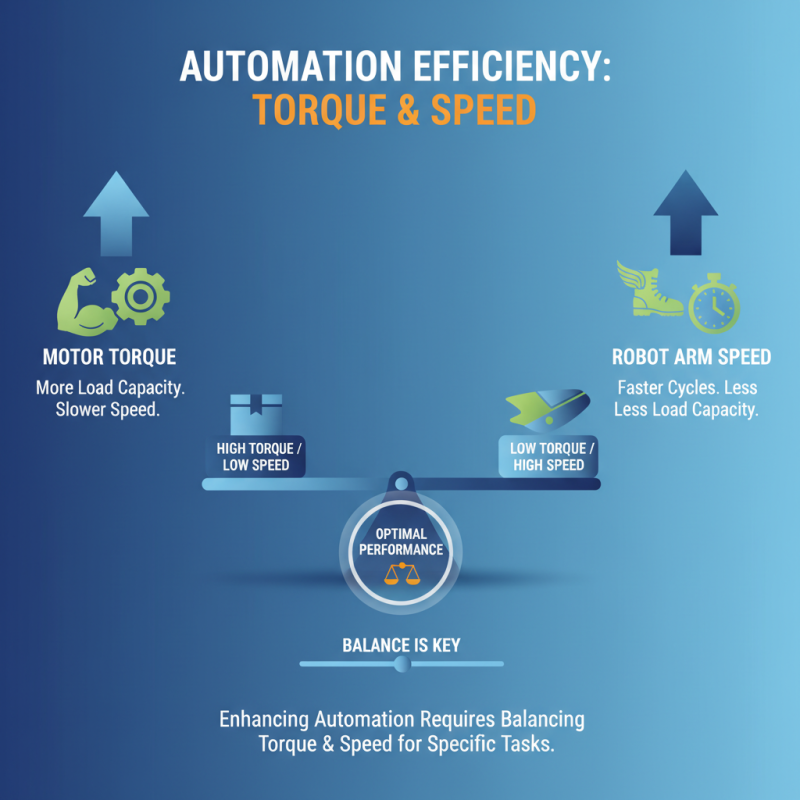
Selecting the right motor for a robot arm is critical for automation efficiency. Key performance metrics include torque, speed, and precision. Torque determines the lifting capability. High torque is essential for demanding applications. Speed affects the cycle time. A balance between speed and torque is necessary for optimal performance.
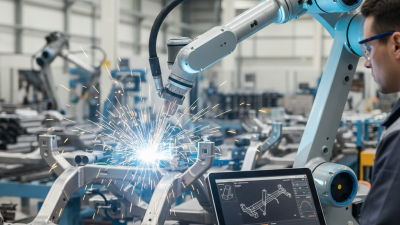
Precision is another vital metric. It impacts the quality of tasks performed by the robot arm. In applications like assembly or welding, even slight deviations can lead to defects. Evaluating motor resolution and control feedback mechanisms can enhance precision. The choice of motor should align with the specific tasks and workload.
Another aspect to consider is energy efficiency. Motors with better energy profiles can reduce operating costs over time. Evaluate the duty cycle to ensure the motor can handle continuous operation. Reflecting on these factors will help in making an informed decision. However, each application may present unique challenges that could influence your choice. Testing various options in real scenarios can highlight their effectiveness and limitations.
Best Robot Arm Motor Options for Efficient Automation Solutions
Future Trends in Robot Arm Motor Technologies and Innovations
The future of robot arm motor technologies holds great promise. With advancements in materials and design, motors are becoming more efficient, which will drive down energy consumption. This aligns perfectly with global sustainability goals. Innovative technologies like brushless motors are becoming more prevalent. They offer excellent torque and speed with less maintenance.
Innovations in artificial intelligence play a vital role. AI can enhance the responsiveness of robot arms, leading to faster and more accurate operations. However, there’s a learning curve involved. Integrating AI requires skilled personnel. As the industry evolves, the demand for training will grow. Companies need to adapt to maintain a competitive edge.
Another area to watch is the miniaturization of components. Smaller motors can reduce the overall weight of robotic systems. Lightweight designs enhance flexibility and capabilities. However, smaller doesn't always mean better; there are trade-offs in power and endurance. Manufacturers must strike a balance to meet diverse needs. This complexity presents challenges worth exploring.