How to Choose the Best Laser Cutting Robot for Your Business Needs?
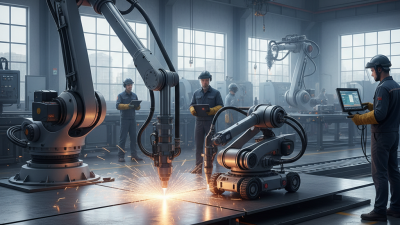
In today's manufacturing landscape, the Laser Cutting Robot has emerged as a vital tool for optimizing production processes. As industry expert Dr. Emily Chen states, "Investing in the right Laser Cutting Robot can transform your operations significantly." Choosing the best robot for your business needs involves careful consideration of various factors. Understanding your specific production requirements is crucial.
Laser Cutting Robots come in different shapes and sizes. Each model offers unique features that may suit your business differently. For instance, a compact robot may work well for small workshops, while larger operations might need a more advanced model. Efficiency, speed, and precision also vary between models, making the decision more challenging.
While the benefits of a Laser Cutting Robot are clear, the selection process can be daunting. It requires critical thinking and a bit of trial and error. Not all machines will meet expectations. Some might fall short in performance, while others may exceed. Taking time to research and reflect is essential in this decision. Make the right choice, and your business can unlock new potentials.

Understanding Your Business Requirements for Laser Cutting
When selecting a laser cutting robot, it's crucial to first grasp your business needs. Consider your production volume. High demand may require a faster machine. If you work on intricate designs, precision is key. Think about the materials you will cut. Different robots excel with various substances like metal or wood.
Tips: Define your production goals. Understand how many pieces you need daily or weekly. This will guide your choice.
Additionally, assess your workspace. Some machines need ample space. Consider your budget as well. Quality machines may have a higher upfront cost. Yet, they could save you in operational efficiency over time.
Tips: Create a budget. Factor in installation and maintenance costs, not just the purchase price.
Finally, evaluate support services. Robots require ongoing maintenance. A reliable support network can reduce downtime. You may not always find the perfect match. Reflect on what compromises you can make. This might lead to better decisions for your unique business situation.
Key Features to Consider in Laser Cutting Robots
When selecting a laser cutting robot, certain key features are essential. Accuracy is paramount. Look for machines that can achieve precision within 0.1 mm. This level of accuracy ensures clean edges and reduces post-processing work. According to recent industry reports, most businesses prioritize cutting speed. Machines that operate at over 20 meters per minute are ideal. Speed enhances productivity and can lower operational costs.
Another feature to consider is the size of the cutting bed. A larger bed allows for bigger materials and more complex projects. Also, consider the robot's software capabilities. User-friendly software can greatly improve workflow. Some robots offer advanced features such as automatic calibration and integrated design tools. This can simplify the process for businesses without in-house engineers.
Tips: Assess your production needs carefully. Don't just focus on the price. These robots are investments. Additionally, think about maintenance costs and support services. Adopting a laser cutting robot without understanding your business needs can lead to regrets later. It's better to invest in a reliable system than to face frequent breakdowns. Always ask for demos or trials before making a decision.
Comparing Different Types of Laser Cutting Technologies
When selecting a laser cutting technology, it's essential to understand the options available. Different types of laser technologies include CO2, fiber, and solid-state lasers. Each has unique characteristics that can impact your business needs. CO2 lasers excel in cutting non-metallic materials, like plastics and wood. They offer excellent precision, but their speed can vary.
On the other hand, fiber lasers are more versatile and efficient for metal cutting. They operate at higher speeds with lower operational costs. However, they may not perform as well on thicker materials. Solid-state lasers provide high power and are suitable for industrial applications. Yet, they have limitations in material versatility compared to the others.
Reflecting on your business requirements is crucial. Consider factors such as material types, thickness, and production speed. A laser cutting system should align with your goals. It's also worth noting that investing in a high-end laser does not always guarantee the best results. Sometimes, a moderate system performs better for specific tasks. Choosing the right technology involves careful consideration and clarity on your production goals.
Comparison of Different Laser Cutting Technologies
Evaluating Cost-Effectiveness and Return on Investment
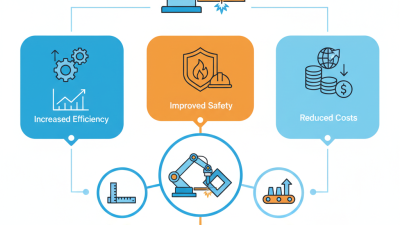
When considering a laser cutting robot, cost-effectiveness often takes center stage. Evaluating the initial investment is crucial. The price of the robot is only part of the total expense. Installation, maintenance, and training also add to the cost. A lower price tag might tempt some businesses. However, the long-term savings should guide decisions.
Compare operating costs and production efficiency.
Calculating return on investment (ROI) is complex. Consider how quickly the robot will pay for itself. Automating processes can reduce labor costs. Yet, there may be unforeseen challenges. Training staff can take time and resources. If the robot doesn’t integrate smoothly with existing systems, it can hinder productivity. Some businesses might overlook these potential pitfalls. A careful review can prevent future losses.
Think about production needs and volume. A smaller company might not need a high-output machine. What seems like a great deal could lead to underutilization. It’s essential to match the robot's capabilities with business goals. Analyze past projects to understand future requirements. Balancing all these factors can help make a sound decision. Aim for a choice that nurtures growth rather than adds strain.