request to quote
Leave Your Message

How to Choose the Right Welding Material for Your Project

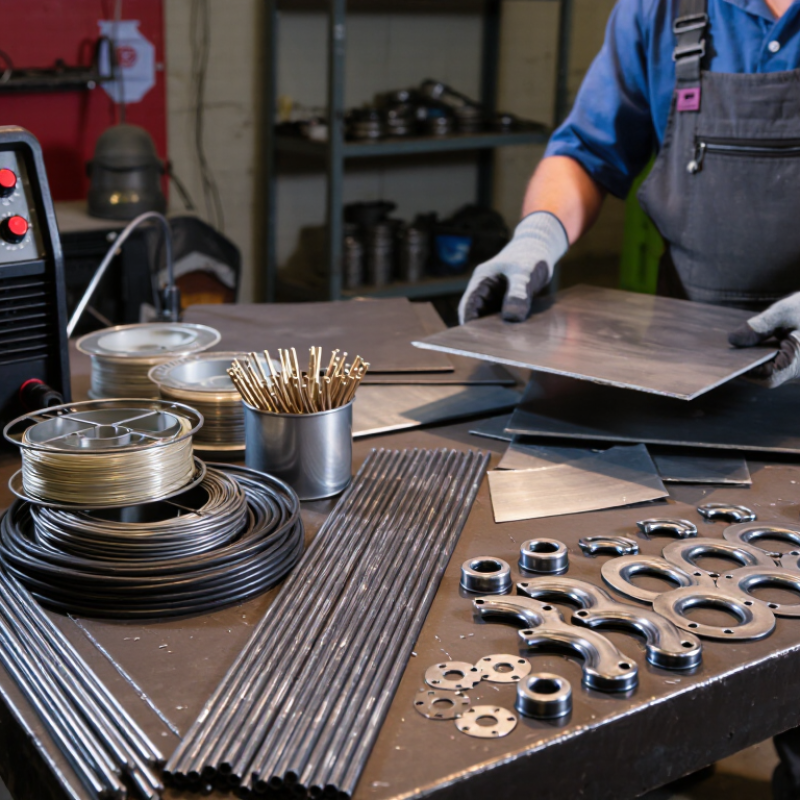
Choosing the right Welding Material can determine whether a project performs safely or fails under pressure. The decision involves more than matching a rod, wire, or filler metal to a drawing. Base-metal chemistry, thickness, joint design, welding position, and service conditions all influence the final result. A material that works well on mild steel may crack on stainless steel or lose strength near high heat.

Experienced welders usually begin with the parent metal and the finished application. A bridge component, food-processing frame, and outdoor repair face very different demands. Temperature, moisture, vibration, corrosion, and expected load should guide the selection. Manufacturer data sheets and qualified welding procedures provide useful boundaries. They also help confirm tensile strength, shielding requirements, polarity, storage conditions, and recommended heat input.

Small details matter. A damp electrode can create porosity. Excessive heat may distort a thin panel. Incorrect filler composition can weaken an otherwise clean joint. These problems are not always visible immediately. Inspection, controlled preparation, and proper cleaning therefore deserve the same attention as material selection.

There is no universal best option. Even experienced professionals sometimes revise their choice after testing a sample joint. That practical step can expose poor arc stability, excessive spatter, or an unexpected color change. Comparing supplier specifications with recognized welding standards improves confidence, but field conditions still matter. A careful selection process balances performance, cost, availability, and operator skill. The strongest recommendation is not always the most expensive material. It is the one that suits the metal, environment, procedure, and actual demands of the project.
How to Choose the Right Welding Material for Your Project

Identify the Base Metal and Its Welding Requirements

Before choosing welding material, identify the base metal, thickness, and service environment. A shiny surface is not enough evidence. Check the mill certificate, material marking, or laboratory analysis when the grade is uncertain.

The World Steel Association reported 1.89 billion tonnes of crude steel production in 2023. This variety creates real welding challenges. Carbon steel, stainless steel, and high-strength steel require different filler metals and heat controls. ISO 15608 classifies many steels into material groups, helping engineers select compatible procedures. However, grouping alone is not sufficient. Confirm tensile strength, yield strength, chemistry, and required impact performance.

Look at the joint, too. A thick plate may need preheating and controlled interpass temperatures. Thin sheet may distort before the weld cools. Moisture-sensitive electrodes require proper storage, while stainless applications demand careful contamination control. The American Welding Society’s D1.1 structural welding standard emphasizes qualified procedures, essential variables, and inspection records. Those records should match the actual base metal, not an assumed substitute.

A common mistake is choosing filler metal by strength alone. Compatibility, dilution, corrosion exposure, and hydrogen risk matter equally. For example, a strong weld can still fail beside the joint if the heat-affected zone becomes brittle. Recheck the specification. Ask whether the selected material suits fabrication, service, and repair conditions. Small assumptions cause expensive rework.
Match the Filler Material to the Metal and Joint Design

How to Choose the Right Welding Material for Your Project

Match the filler material to the metal and joint design before striking an arc. The base metal’s chemistry, thickness, and service environment all matter. A filler that matches tensile strength may still fail in corrosion resistance. For carbon steel, check carbon content and weldability. Stainless steel requires attention to alloy compatibility and heat exposure. Aluminum demands careful control of oxide removal and heat input.

Joint design changes the filler requirement. A narrow butt joint may need a smaller diameter wire for controlled penetration. A wide fillet weld may require greater deposition efficiency. Root gaps, joint angles, and access also influence the choice. In my workshop experience, poor fit-up often creates more trouble than an imperfect filler selection. Small gaps can increase dilution and distortion. They can also trap slag or create incomplete fusion.

Review the applicable welding procedure before purchasing material. Confirm the filler classification, polarity, shielding gas, and preheating requirements. Keep filler metal dry and traceable. Moisture can introduce defects, especially in restrained joints. I once chose a convenient filler without checking the joint’s impact requirements. The weld looked clean, but the decision needed more technical review. Visual inspection alone is not enough. When the joint carries pressure, vibration, or repeated loads, use qualified procedures and suitable testing. A practical trial weld can reveal arc stability, penetration, and cleaning problems before production begins.

How to Choose the Right Welding Material for Your Project

Match the filler material to the base metal and joint design. The chart compares typical minimum tensile-strength values for commonly specified filler classifications. Use low-hydrogen carbon-steel fillers for restrained structural joints, corrosion-resistant stainless fillers for 304 stainless steel, silicon-containing aluminum fillers for many 6061 joints, and copper-silicon fillers for suitable copper-alloy applications. Confirm the final selection against the applicable welding procedure and material specification.

Choose Materials for the Welding Process and Equipment

Choosing welding material starts with the process and equipment, not the material catalog. A compact inverter may handle thin stainless steel with TIG, but it can struggle with thick carbon steel. Check amperage, duty cycle, polarity, wire diameter, and shielding-gas requirements before buying filler metal. A poor match creates unstable arcs, excess spatter, or incomplete fusion.

Material cleanliness matters. Remove oil, rust, paint, and moisture before welding. For carbon steel, select filler metal with compatible strength and hydrogen control. Stainless steel needs matching corrosion resistance, while aluminum demands careful oxide removal and suitable AC equipment. Welding procedure specifications should define preheat, interpass temperature, and heat input. Standards such as AWS D1.1 and ASME Section IX provide recognized qualification frameworks, but field conditions still require judgment.

The equipment limits the choice.

The U.S. Bureau of Labor Statistics projects about 42,600 annual openings for welders, cutters, solderers, and brazers from 2023 to 2033. That demand makes repeatable material selection increasingly important. In practice, I would test a short sample joint before production. I have seen technically correct filler metal fail because the torch angle, gas flow, or joint fit-up was wrong. This is where selection becomes less perfect. Recheck the manufacturer’s technical data, record the machine settings, and compare the finished bead with the approved procedure. A cheaper material may cost more after repairs, grinding, and delays.

How to Choose the Right Welding Material for Your Project - Choose Materials for the Welding Process and Equipment
Welding Process Suitable Base Materials Common Filler Material Required Equipment and Consumables Typical Material Thickness Shielding and Polarity Key Advantages Important Selection Considerations
GMAW
(MIG/MAG)
Carbon steel Stainless steel Aluminum Solid wire matched to the base metal, such as mild-steel, stainless-steel, or aluminum wire. Constant-voltage power source, wire feeder, welding gun, contact tip, drive rolls, shielding-gas regulator, and suitable wire liner. Approximately 0.8–20 mm, depending on current, joint design, wire diameter, and number of passes. Usually direct-current electrode positive. Argon, carbon dioxide, or an argon-based gas blend may be selected according to the material and transfer mode. High productivity, continuous wire feeding, relatively low slag, and easy automation. Select wire diameter and gas flow for the thickness and position. Outdoor work can be difficult because wind may disrupt the shielding gas.
GTAW
(TIG)
Stainless steel Aluminum Copper alloys Carbon steel Titanium Separate filler rod selected for the base-metal chemistry; autogenous welding may be possible for some thin joints. Constant-current power source, TIG torch, nonconsumable tungsten electrode, shielding-gas system, and often a foot control or remote amperage control. Approximately 0.5–10 mm for common manual work; thicker sections usually require multiple passes. Argon is widely used. Helium or argon-helium blends can increase heat input. Direct-current electrode negative is common for steels; alternating current is commonly used for aluminum and magnesium. Excellent control, clean welds, and strong performance on thin sections and critical joints. Requires more operator skill and is slower than wire-feed processes. Cleanliness is essential, especially for aluminum, stainless steel, and titanium.
SMAW
(Stick)
Carbon steel Low-alloy steel Stainless steel Cast iron Flux-coated electrodes selected by strength, alloy, welding position, and hydrogen-control requirements. Constant-current power source, electrode holder, work clamp, welding leads, and electrodes stored according to their moisture-control requirements. Approximately 3–25 mm and above; thin sheet requires careful current control and suitable electrodes. The electrode coating creates its own shielding gas and slag. Polarity depends on the electrode classification and manufacturer instructions. Portable, effective outdoors, and less sensitive to moderate wind than externally shielded processes. Slag must be removed between passes. Electrode moisture, arc length, and storage conditions strongly affect weld quality.
FCAW
(Flux-Cored Arc Welding)
Carbon steel Low-alloy steel Stainless steel Self-shielded or gas-shielded flux-cored wire matched to the required strength, toughness, position, and service conditions. Constant-voltage power source, wire feeder, flux-cored gun, correct drive rolls and liner, and shielding-gas equipment when using gas-shielded wire. Approximately 2–30 mm and above, depending on wire diameter, current, and joint preparation. Self-shielded wire requires no external gas. Gas-shielded wire commonly uses carbon dioxide or an argon-based blend. Polarity must follow the wire classification. High deposition rate, good penetration, and useful performance on thicker steel and some outdoor applications. Produces slag and fumes. Self-shielded wire can tolerate wind better, while gas-shielded wire generally offers smoother operation and lower spatter.
SAW
(Submerged Arc Welding)
Carbon steel Low-alloy steel Stainless steel Continuous solid wire or cored wire used with granular flux selected for the base metal and required weld properties. Welding power source, wire feeder, travel carriage or mechanized system, flux hopper, contact assembly, and flux recovery equipment where applicable. Commonly used for medium-to-heavy plate, often above 6 mm, with single- or multi-wire configurations for higher deposition. The arc is covered by granular flux, so external shielding gas is normally unnecessary. Polarity and current type depend on the wire-flux combination. Very high deposition rate, deep penetration, consistent weld quality, and low visible arc radiation. Generally limited to flat or horizontal welding and accessible joints. Base-metal preparation and flux handling are important.
Oxy-Fuel Welding Carbon steel Copper alloys Thin sheet Compatible bare filler rod selected for the base material; flux may be required for some nonferrous alloys. Fuel-gas cylinder, oxygen cylinder, regulators, hoses, torch, flashback arrestors, tips, and suitable filler rod. Typically used for thin materials, brazing, heating, repair work, and cutting rather than heavy structural welding. Flame chemistry is controlled by adjusting the oxygen-to-fuel ratio. No separate arc polarity is used. Portable and useful where electrical power is unavailable; the same equipment can support heating, brazing, and cutting. Heat input is relatively broad and slow compared with arc processes. Cylinder handling, ventilation, leak checks, and flashback protection are essential.
Selection guideline: Match the filler material to the base-metal chemistry and required mechanical properties, then verify the recommended current range, polarity, shielding gas, electrode or wire diameter, and joint procedure before welding. Always follow the applicable welding code, qualified procedure, and safety requirements.

Compare Strength, Corrosion Resistance, and Operating Conditions

Choosing welding material starts with the joint’s actual load, not the cheapest filler. Typical structural carbon steels offer yield strengths near 250 MPa. Some precipitation-hardened alloys exceed 900 MPa. However, heat input can soften the heat-affected zone, especially in aluminum. AWS D1.1 requires qualified procedures because strength depends on more than parent-metal figures. A stronger alloy can still produce a weaker repair.

Corrosion deserves equal weight. The NACE IMPACT study estimated global corrosion costs at $2.5 trillion annually, about 3.4% of global GDP. For wet, chloride-rich service, chromium-bearing stainless steels form passive films. Molybdenum additions can improve localized corrosion resistance. Carbon steel may need coatings, thickness allowance, or cathodic protection. ISO 9223 corrosivity categories help classify atmospheric exposure, but a coastal workshop differs greatly from an offshore splash zone. Small wording, big risk.

Operating temperature, chemicals, abrasion, and cleaning cycles narrow the choice. At subzero temperatures, toughness data matters more than room-temperature tensile strength. At elevated temperatures, creep can control failure. Match filler chemistry to the base metal, then check dilution, hydrogen control, preheat, and post-weld treatment. In practice, the strongest option may lose on availability or weldability. I would document that compromise. A comparison table cannot replace procedure testing and service-specific corrosion review. Some assumptions fail.

Verify Compatibility, Standards, Availability, and Project Cost

How to Choose the Right Welding Material for Your Project
Verify Compatibility, Standards, Availability, and Project Cost

When choosing welding material, start with the base metal, thickness, joint design, and welding process. Check the filler metal’s chemistry, strength, and service temperature against the parent material. A compatible filler should support the joint without creating excessive hardness, cracking, or corrosion risk. I always review the project’s welding procedure and qualification records before approving a material.

Standards matter. Confirm the required classification through applicable AWS, ASME, ISO, or local specifications.

These documents may control tensile strength, impact performance, shielding requirements, and inspection methods. Do not rely only on a supplier’s description. Ask for current certificates, batch identification, and storage instructions. Small details matter.

Keep it practical.

Availability can change the best technical choice. A perfect filler is not useful if delivery delays stop fabrication. Compare local stock, minimum order quantities, shelf life, and storage conditions. Then calculate the real project cost, including wire or electrode waste, shielding gas, labor, preheating, post-weld treatment, inspection, and possible rework. A low purchase price can mislead. I have seen inexpensive materials create expensive delays when operators needed unfamiliar settings. My selection process is not flawless, so I recheck the material against field conditions, especially moisture exposure, restricted access, and repair requirements. A short trial weld can reveal problems that paperwork misses.