What is Machine Vision Welding and How Does It Work?
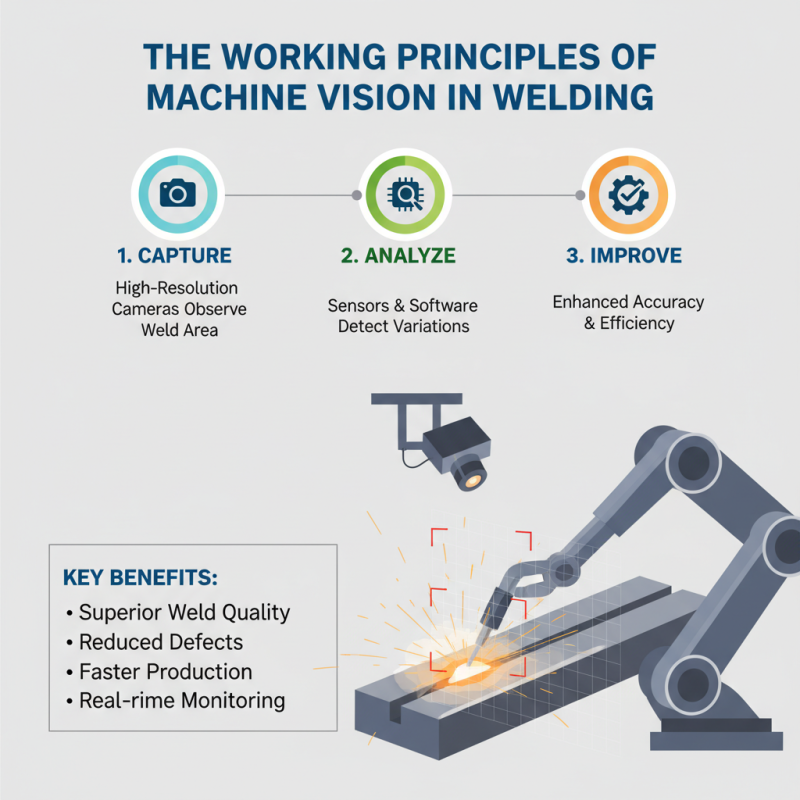
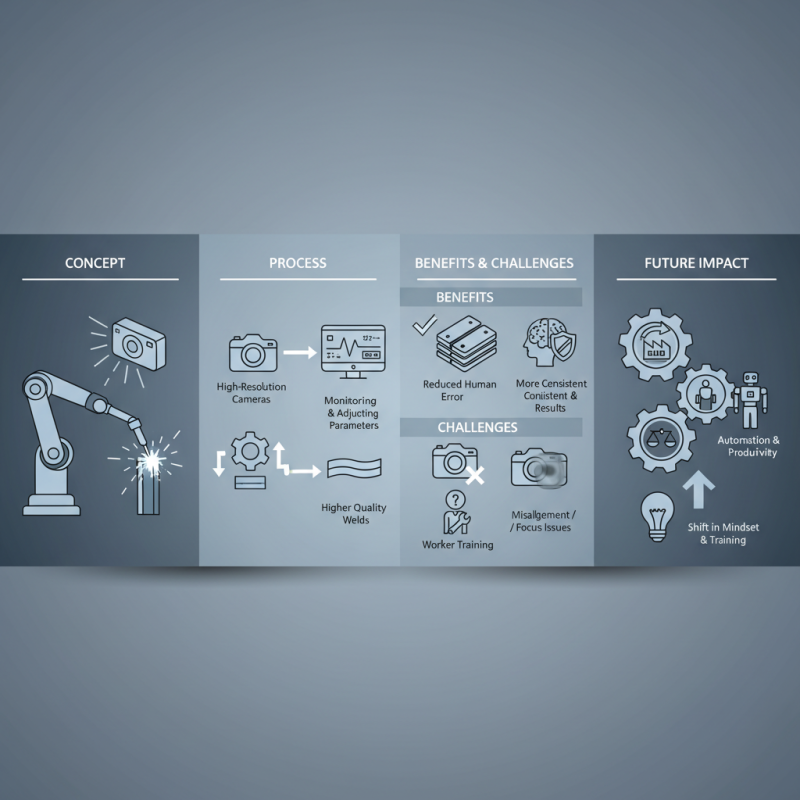
Machine Vision Welding is an innovative technology transforming the welding industry. It employs advanced imaging systems to improve accuracy and efficiency. With high-resolution cameras, this technique captures real-time data during welding processes. This data helps in monitoring and adjusting parameters as needed, ensuring a higher quality of welds.
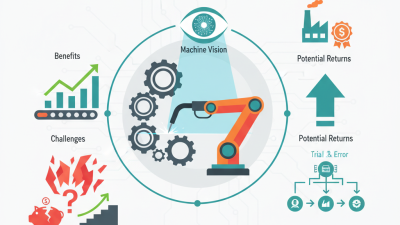
The integration of machine vision into welding brings significant benefits. It reduces human error, leading to more consistent results. However, challenges remain. Misalignment or camera focus issues can occur, requiring adjustments. Workers must understand the technology to maximize its potential.
Machine Vision Welding is not just a trend; it’s a step toward automation. Its impact on productivity is noticeable. But, it also raises questions about job displacement. Balancing technology and skilled labor is crucial for the future of manufacturing. Embracing this technology may require a shift in mindset and training.
Understanding Machine Vision Welding: An Overview
Machine vision welding is an innovative technology that merges robotics with visual intelligence. It allows machines to "see" and analyze welding tasks. This capability enhances precision and reduces human error. By using cameras and sensors, these systems can detect inconsistencies in welds. The result is a more reliable manufacturing process.
However, implementing machine vision welding isn't without its challenges. Proper calibration is crucial. If the system is not set correctly, it may misread the weld joint. This can lead to subpar results. Additionally, lighting conditions can greatly affect how well the system perceives the workpiece. A bright glare or shadow may obscure important details.
Integrating this technology requires significant training. Operators must understand how to interpret the data provided by the vision system. Sometimes, this technology may struggle with complex geometries. While it offers many benefits, it is essential to recognize its limitations. Continuous tweaking and improvement play important roles in success.
Key Components of Machine Vision Welding Systems
Machine vision welding systems integrate advanced imaging technology into automated welding processes. At the core of these systems are several key components. Cameras capture real-time images of the weld area, aiding in precision and accuracy. These cameras often have high resolution, supporting the detection of minor defects in complex weld joints. The information gathered enables quick adjustments during welding, reducing errors and enhancing the quality of the final product.
Another essential component is the lighting system, which illuminates the welding area consistently. Proper lighting ensures that the cameras can accurately monitor the weld pool and detect inconsistencies. Studies reveal that a well-designed lighting system can improve defect detection rates by up to 40%. Additionally, the software used in machine vision systems analyzes the captured images. It translates data into actionable insights that guide the welding process in real-time.
Despite advances, challenges exist. Variations in environmental conditions can affect system performance. Factors like smoke, spatter, or ambient light can lead to misinterpretations. Given that nearly 30% of welds may contain undiscovered defects, constant evaluation and improvement of machine vision systems are crucial. The technology continues to evolve, yet achieving flawless integration remains a work in progress.
Machine Vision Welding System Performance Metrics
Applications and Benefits of Machine Vision Welding
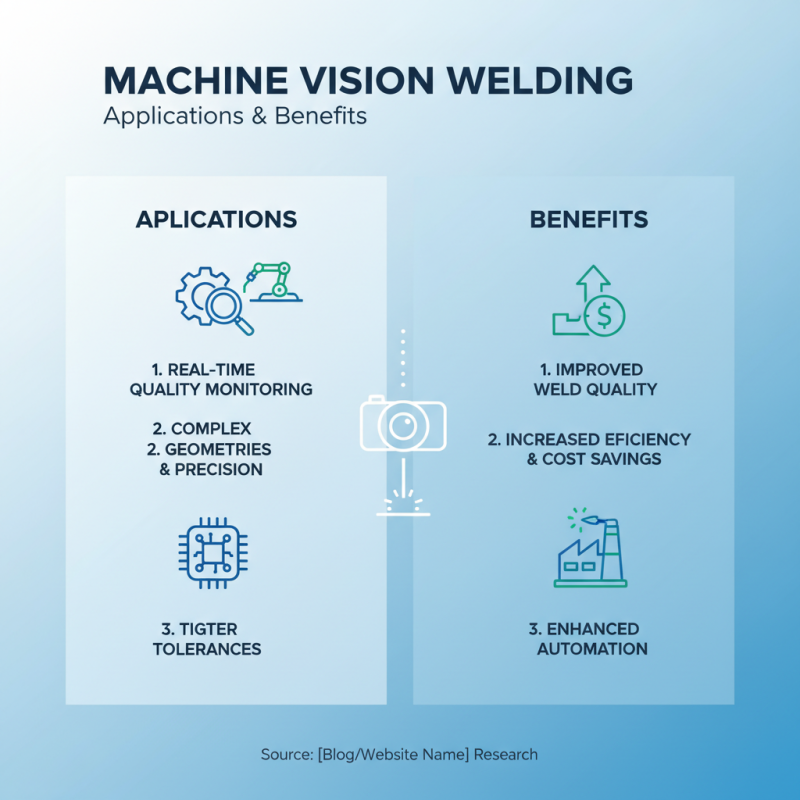
Machine vision welding integrates advanced imaging technology into the welding process. It provides significant improvements in quality and efficiency. This technology allows for real-time monitoring of weld quality, ensuring tighter tolerances. It is especially useful in areas with complex geometries or where precision is critical.
One major application is automotive manufacturing. Machine vision welding inspects joints, identifies defects, and adjusts parameters instantly. This leads to fewer errors and reduced waste. Industries also benefit from enhanced safety. By relying less on manual inspections, the risk of worker injury decreases.
**Tip:** Regularly calibrate your machine vision systems. Calibration ensures accuracy in measurement, leading to better weld quality.
Another application is in electronics. This sector demands high precision, making machine vision a perfect fit. However, it is not without challenges. Sometimes, the vision systems can misinterpret reflections. Operators need training to mitigate these issues. Monitoring the system’s performance is crucial.
**Tip:** Implement a feedback loop for continuous improvement. This practice helps refine techniques and increases system reliability.
Challenges and Future Trends in Machine Vision Welding
Machine vision welding is transforming the manufacturing landscape, yet challenges remain. One key issue is the variability in materials. Different surfaces reflect light differently. This inconsistency impacts machine accuracy. Complex geometries also pose a problem. The sensor might struggle to focus on intricate shapes. Lighting conditions can further complicate this. Too much glare or shadows can lead to misalignment during welding tasks.
Future trends indicate a shift toward more adaptive systems. These systems could adjust to various environments and materials. Integrating AI into machine vision could enhance real-time processing. However, there's a concern about data reliability. The system must be trained on diverse datasets to function effectively. Without it, performance may falter in unpredictable situations. Continuous improvement is vital. There is a need for ongoing research and development. Solutions should be practical and applicable to different industries.
Ultimately, the path forward involves addressing these challenges head-on. Each advancement opens new opportunities. Yet, learning from past errors is crucial. Understanding failures can illuminate better practices. Embracing this iterative process will drive innovation in machine vision welding.
What is Machine Vision Welding and How Does It Work? - Challenges and Future Trends in Machine Vision Welding
| Aspect |
Description |
Challenges |
Future Trends |
| Definition |
Machine vision welding involves the use of imaging technologies to guide and monitor welding processes. |
Lighting conditions can affect image quality. |
Increased use of AI for improved decision-making. |
| Technology |
Utilizes cameras, sensors, and software to analyze welding quality in real-time. |
Integration with existing systems can be complex. |
Advancements in sensor technology for higher precision. |
| Benefits |
Improves weld quality, reduces defects, and enhances process efficiency. |
High initial setup costs. |
Growing adoption in various manufacturing sectors. |
| Applications |
Used in automotive, aerospace, and heavy machinery industries. |
Skill gaps in workforce to handle advanced technologies. |
Increased automation and smart factories. |
| Performance Metrics |
Common metrics include weld strength, penetration, and bead size. |
Standardizing metrics across different industries. |
Real-time monitoring and predictive analytics. |