China Top 10 Thin Plate Precision Welding Suppliers
China has become a significant source of advanced metal fabrication for electronics, medical equipment, automotive parts, and industrial assemblies. This guide examines China’s top 10 Thin Plate Precision Welding suppliers through practical manufacturing criteria. These criteria include material compatibility, welding method, dimensional control, surface protection, inspection procedures, and delivery consistency.
A reliable supplier should handle stainless steel, aluminum, galvanized sheet, and other thin-gauge materials without excessive distortion. It should also explain its process clearly. Laser welding, micro-TIG welding, and robotic welding may suit different thicknesses and production volumes. Small details matter. A clean weld bead matters. So does repeatability.
The selection also considers engineering support, prototype capability, production capacity, traceability, and quality documentation. Factory experience is valuable when a design includes tight tolerances, hidden joints, or heat-sensitive components. Sample testing remains essential, even when a supplier presents impressive equipment and certificates. Claims require verification.
This list is not a permanent ranking. Supplier capabilities, equipment, management systems, and lead times can change. That limitation deserves attention. Buyers should review drawings, request sample welds, confirm inspection standards, and discuss packaging before placing large orders. Site audits or independent inspections may provide stronger evidence.
Each company profile should therefore present balanced information. Strong equipment alone does not guarantee reliable results. Clear communication, consistent workmanship, and corrective action often reveal more. This introduction provides a practical starting point for comparing Chinese welding partners and identifying suppliers suited to demanding thin-plate applications.
Thin Plate Precision Welding: Definition, Scope, and Industry Role
Thin plate precision welding joins relatively light-gauge metal, often below 3 millimeters, while controlling heat, distortion, and joint accuracy. Common processes include laser welding, micro-TIG, and resistance welding. The work serves electronics, medical equipment, battery enclosures, instruments, and lightweight industrial assemblies.
The scope extends beyond the weld itself. A capable supplier manages edge preparation, fixturing, shielding gas, parameter records, dimensional inspection, and traceability.
A 0.8-millimeter stainless-steel cover may require a narrow heat-affected zone and carefully controlled clamping. Small gaps can still cause burn-through, warping, or weak penetration. Precision has practical limits.
The International Federation of Robotics reported 276,288 industrial robots installed in China during 2023, representing about 51% of global installations. This figure shows the country’s strong automation base, but automation alone does not prove welding quality. The International Energy Agency reported that global electric-car sales exceeded 17 million in 2024, increasing demand for lightweight, repeatable metal assemblies.
Yet supplier comparisons should examine process validation, sample results, operator expertise, and inspection evidence. I would not rank companies only by equipment count. That approach is convenient, but incomplete.
Thin plate welding remains sensitive to material variation, surface contamination, and design changes. Reliable evaluation needs production records, not polished claims.
How China’s Top 10 Precision Welding Suppliers Are Selected
Selecting China’s top 10 thin plate precision welding suppliers requires more than comparing website claims. The assessment begins with production experience. Reviewers examine welded samples, operator skills, equipment condition, and inspection records. Thin stainless steel and aluminum can distort quickly. Small heat changes may create visible warping or hidden weakness.
Technical capability receives strong weight. Suppliers are checked for laser, TIG, or resistance welding performance. Test pieces must meet agreed dimensions, penetration, and surface requirements. Inspectors review tolerance control with calibrated gauges and measuring equipment. Material certificates, welding procedures, and batch traceability also matter. Reliable suppliers can explain each production step clearly. They do not hide defects behind polished photographs.
Quality systems are evaluated through audits, corrective-action records, and customer references. Delivery history, production capacity, packaging methods, and communication speed are included in the score. Legal compliance and workplace safety are essential, not optional. An independent site visit provides stronger evidence than online information. Still, the ranking is not permanent. Public records may be incomplete, and one successful sample cannot prove long-term consistency. A supplier may perform well on thin panels but struggle with complex assemblies. That weakness should remain visible in the evaluation. The final list therefore combines measurable results with practical factory experience, while allowing room for reassessment when materials, equipment, or production teams change.
Profiles of China’s Top 10 Thin Plate Welding Suppliers
China’s top 10 thin plate welding suppliers show different strengths rather than one universal advantage. Some focus on fiber-laser welding for stainless steel housings and aluminum panels. Others specialize in precision TIG, micro-resistance welding, or automated production cells. Their profiles should be assessed through accuracy, heat control, repeatability, service coverage, and documented testing. A 0.3-millimeter sheet can warp quickly when energy input is poorly controlled. That detail matters.
The International Federation of Robotics reported 276,288 industrial robot installations in China during 2023, representing about 51% of global installations. This figure helps explain the suppliers’ strong automation capabilities. Many leading factories now combine seam tracking, vision inspection, programmable fixtures, and real-time parameter recording. Their export experience also varies. Some offer complete production lines, while others provide compact machines for contract manufacturers. Public data remains uneven. A supplier may advertise impressive tolerances without publishing long-term rejection rates, which deserves careful review.
Tips: Request sample welds using your actual alloy and thickness. Check distortion after cooling, not immediately after welding. Ask for calibration records, operator training, spare-part lead times, and independent inspection reports. ISO 3834-based quality systems can improve traceability, but certification alone cannot replace hands-on trials. A factory visit is useful, though not always practical. Video evidence can help, but it is never equal to audited production data.
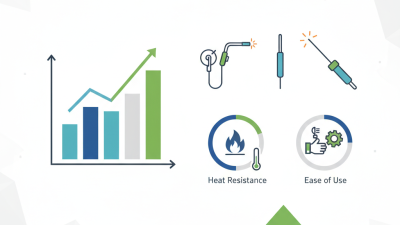
This chart compares commonly used welding processes for thin metal plates. The suitability score reflects practical control of heat input, distortion, weld precision, and compatibility with thin-gauge materials. Actual capabilities vary by material, joint design, equipment, and operator expertise.
Applications and Guidance for Choosing a Chinese Welding Supplier
China’s thin plate precision welding suppliers serve electronics enclosures, laboratory equipment, lighting housings, food machinery, and custom metal assemblies. These applications demand clean seams, controlled heat input, and minimal distortion. A 0.8 mm stainless-steel panel can warp quickly if the welding sequence is poorly planned. Small details matter.
When comparing the top ten suppliers, request samples made from your actual material and thickness. Review weld appearance, dimensional reports, surface treatment, and edge finishing. Ask how the factory controls fixtures, shielding gas, operator qualifications, and inspection records. A capable supplier should explain its process clearly, not only offer a low quotation. Check production capacity, drawing review procedures, traceability, and realistic lead times. Third-party audits can add confidence, but they cannot replace direct technical discussion.
I recommend starting with a small pilot order. Measure flatness, hole locations, joint strength, and cosmetic consistency after delivery. Keep the inspection standard written and agreed before production. A polished sample can still hide unstable production methods. I once treated fast communication as proof of reliability; it was not. Response quality matters more than response speed. Suppliers should also identify risks, such as thin material burn-through or coating damage, before fabrication begins. Ask for corrective-action records when defects occur. Their honesty during a problem is often more valuable than a perfect sales presentation. Supplier selection is not only a price decision. It is a test of engineering discipline.