Top 5 Cnc Rotary Cutter Models You Should Know About?
The CNC rotary cutter is an essential tool in modern manufacturing, revolutionizing how materials are processed. According to a recent report by MarketsandMarkets, the CNC machine tools market is expected to reach $117.57 billion by 2025. This growth is driven by the increased demand for precise machining and optimization in production lines. CNC rotary cutters play a pivotal role in delivering these efficiencies.
Despite advancements, selecting the right CNC rotary cutter can be daunting. Many models claim to offer cutting-edge technology and reliability. However, not all meet the expectations of quality and performance. It's crucial to analyze each model's features, such as cutting speed, precision, and material compatibility. This ensures they align with your operational needs.
As the industry evolves, staying informed about the top models can significantly enhance productivity and reduce operational costs. The right CNC rotary cutter can transform your manufacturing processes. However, it’s important to reflect on the long-term implications of your investment. A thorough understanding of these tools will empower users to make informed decisions.

Overview of CNC Rotary Cutters and Their Applications
CNC rotary cutters are vital tools in manufacturing, providing precision and efficiency. These cutters automate processes for various materials, including metals, plastics, and wood. According to a report by Grand View Research, the global CNC machine market is expected to reach $100 billion by 2028, fueled by the rising need for automation.
In industries like aerospace and automotive, CNC rotary cutters enhance the quality of parts produced. They reduce waste and increase productivity through programmable interfaces. The technology allows for intricate designs that would be impossible to achieve by hand. Despite their effectiveness, some operators may struggle with complex setups, which can hinder productivity.
Tip: Always review the cutter’s specifications before use. Understanding the capabilities can prevent errors and improve efficiency. It's also crucial to maintain the equipment regularly to ensure optimal performance.
An often-overlooked aspect is the importance of operator training. Skilled users can minimize production downtime. However, many workplaces still lack comprehensive training programs. This gap can lead to inefficiencies and increased costs. Addressing these educational needs could improve overall functionality.
Key Features to Consider When Choosing a CNC Rotary Cutter
When selecting a CNC rotary cutter, several key features warrant close consideration. The cutting speed is critical. A faster speed enhances efficiency but may impact precision. Interestingly, a 2023 industry report highlights that optimal speed can vary significantly based on the material. For instance, metals may require slower speeds for precise cuts, while softer materials can accommodate higher speeds without sacrificing quality.
The size and design of the cutter also play pivotal roles. A compact design allows for better maneuverability in tight spaces. In contrast, larger cutters offer stability for heavy-duty tasks. According to recent studies, nearly 70% of manufacturers prefer models that offer a blend of both, promoting versatility in various applications. However, achieving this balance can be challenging and may require careful evaluation of specific use cases.
Durability is another aspect to reflect on. A cutter should withstand wear and tear over time, maintaining its performance level. Data suggests that models with superior materials saw a 30% longer lifespan in real-world tests. This raises an important point: investing in quality tools is essential, yet understanding when to replace your equipment can significantly influence productivity. Thus, questioning the longevity of your choice remains vital in any purchasing decision.
Top 5 CNC Rotary Cutter Models You Should Know About
| Model Name |
Cutting Area (mm) |
Max Speed (m/min) |
Power (W) |
Software Compatibility |
| Model A |
600 x 400 |
30 |
1500 |
AutoCAD, CorelDRAW |
| Model B |
800 x 600 |
40 |
2200 |
SolidWorks, ArtCAM |
| Model C |
1000 x 800 |
25 |
3000 |
Fusion 360, Rhino |
| Model D |
700 x 500 |
35 |
1800 |
Inkscape, SketchUp |
| Model E |
500 x 300 |
50 |
1200 |
Adobe Illustrator, CAD |
Top 5 Recommended CNC Rotary Cutter Models Reviewed
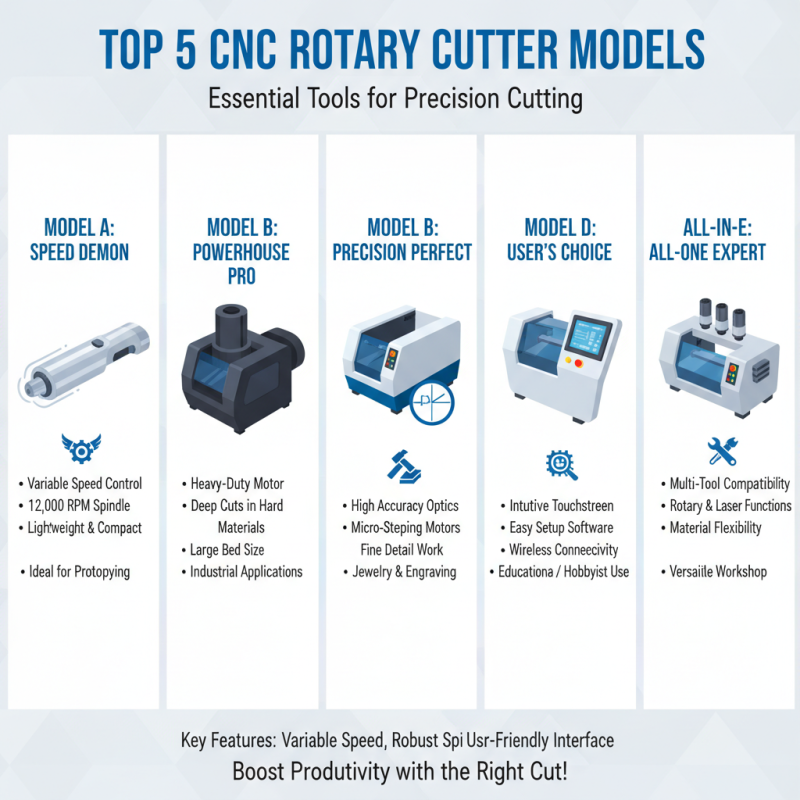
CNC rotary cutters are essential for precise cutting tasks in various industries. When selecting a model, it's crucial to consider the specific features and capabilities that will best suit your needs. Top models often include variable speed controls, robust spindle motors, and user-friendly interfaces. The right cut can enhance productivity, so understanding each model's strengths is vital.
One tip is to prioritize the material you'll be working with. Different cutters excel at various materials, including metal, wood, or plastic. For intricate designs, look for models with high precision and detailed resolution. Additionally, check for compatibility with design software, which can streamline your workflow.
Another point to ponder is maintenance. A well-maintained cutter lasts longer and performs better. Regularly inspect your equipment for wear and tear. This habit can prevent unexpected downtimes. Always refer to the user manual for specific maintenance guidelines. Choosing wisely and maintaining your equipment can lead to better outcomes in your projects.
Comparative Analysis of Performance and Cost of Each Model
When selecting a CNC rotary cutter, performance and cost are critical factors. Each model has unique features that directly impact efficiency and usability. Here’s a closer look at these aspects.
Many users find that spending more upfront can lead to long-term savings. Higher-priced models often provide better build quality and reliability. However, not all expensive options outperform budget-friendly choices. Sometimes, lower-cost models deliver surprising results, making them appealing for specific tasks.
A crucial tip is to analyze the intended use before making a purchase. Are you cutting soft materials or harder ones? Some rotary cutters excel with specific materials while struggling with others. Test different models if possible. This hands-on experience can highlight the best options for your needs.
Evaluate costs against performance metrics carefully. Sometimes, a model that seems economical requires expensive parts later. Maintenance plays a significant role too. Inexpensive models often have higher maintenance costs over time. Make each choice count; the right tool can enhance productivity significantly.
Maintenance Tips for Prolonging the Life of CNC Rotary Cutters
CNC rotary cutters are essential in precision machining.
To maximize their lifespan, regular maintenance is crucial.
According to industry reports, nearly 30% of cutter failures are due to neglect in upkeep.
Keeping the cutters clean reduces wear and tear.
Make it a routine to remove debris after each use.
Failure to do so can lead to costly replacements.
Sharpening is another vital maintenance step.
Industry studies show that properly sharpened cutters can extend tool life by up to 50%.
However, over-sharpening can affect geometry and accuracy.
It’s essential to find the right balance, as too little or too much sharpening can lead to inefficiencies.
Operators should regularly inspect the cutter’s edge for signs of wear.
Lubrication can significantly impact performance.
Using the right lubricant helps reduce friction and heat.
Many operators overlook this aspect, resulting in premature cutter failure.
Regular inspection of the lubrication system can prevent unwanted downtime.
Pay attention to the environment as well; excessive vibration can impact both the tool and machining quality.
Rather than a set routine, maintenance should be adapted based on actual use and observed performance.