request to quote
Leave Your Message

Top Flame Cutting Robot Manufacturers for Global Buyers?

For global buyers, choosing a Flame Cutting Robot involves more than comparing prices, motor ratings, or catalogue photographs. A reliable system must match the steel grade, plate thickness, cutting table size, production rhythm, and local service capacity. It should also deliver stable flame control, accurate torch height, clean pierces, and repeatable edge quality. These details become visible on the shop floor: a warped plate, a delayed ignition, or excessive slag can quickly reduce productivity.

Dr. Robert W. Messler Jr., a respected welding automation researcher, offers a useful principle: “Automation magnifies both process discipline and process weakness.” This observation matters when evaluating manufacturers. A capable robot cannot compensate for poor gas regulation, unsuitable cutting parameters, weak operator training, or irregular maintenance. Buyers should examine demonstration records, controller usability, spare-parts access, safety documentation, and after-sales response times. Ask for sample cuts using comparable carbon-steel plates. Do not rely only on polished videos.

The leading manufacturers usually combine mechanical stability with practical software. Their systems may support bevel cutting, nesting integration, collision protection, and remote diagnostics. However, “advanced” does not always mean better. A simpler Flame Cutting Robot may outperform a complex model in a demanding fabrication workshop. This guide compares manufacturers from a buyer’s perspective, focusing on cutting consistency, customization, lifecycle cost, training, and regional support. Some rankings remain debatable. Market data can also change quickly. Careful buyers should verify every claim before signing a purchase contract.
Top Flame Cutting Robot Manufacturers for Global Buyers?

Flame-Cutting Robot Basics: 4–6 Axes, Oxy-Fuel Gas, and ±0.1 mm Repeatability

Flame-cutting robots typically use four to six axes for controlled movement around steel plates. A four-axis system suits straight cuts, bevels, and repeated profiles. Six-axis equipment adds wrist flexibility for angled edges and awkward workpieces. Axis count matters. Global buyers should match motion range with plate size, torch access, and production volume.

The process combines oxygen with fuel gas, often propane or acetylene, to preheat and cut carbon steel. Gas pressure, nozzle condition, torch height, and travel speed strongly affect the kerf. A clean cut leaves a narrow edge with limited slag. A poor setup creates heavy dross and uneven corners. Small details matter.

A specification of ±0.1 mm repeatability means the robot can return near the same programmed position. It does not guarantee identical cut accuracy on every plate. Heat distortion, worn nozzles, loose fixtures, and scale can change results. Ask manufacturers for test-cut samples, calibration records, and measured reports. Ask for evidence. In practice, even a well-tuned cell may drift after long shifts. I would treat the ±0.1 mm figure as a controlled-condition target, not a promise for every production environment. Regular torch inspection and operator training remain essential, although they are easy to underestimate.
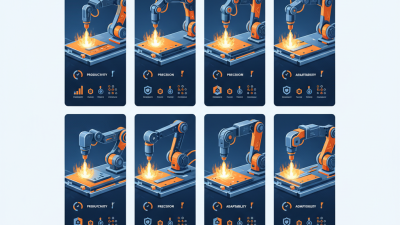
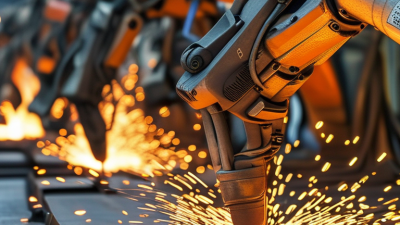
Flame-Cutting Robot Basics for Global Buyers

Oxy-fuel cutting robots commonly use propane, natural gas, or acetylene with oxygen. The approximate neutral-flame temperatures below are engineering reference values and may vary with gas purity, pressure, and burner design.

Industrial systems are commonly configured with 4–6 axes, while a repeatability target of approximately ±0.1 mm is used in high-precision positioning applications.

Top Manufacturer Categories: Robotic Cells for 6–300 mm Steel Plate

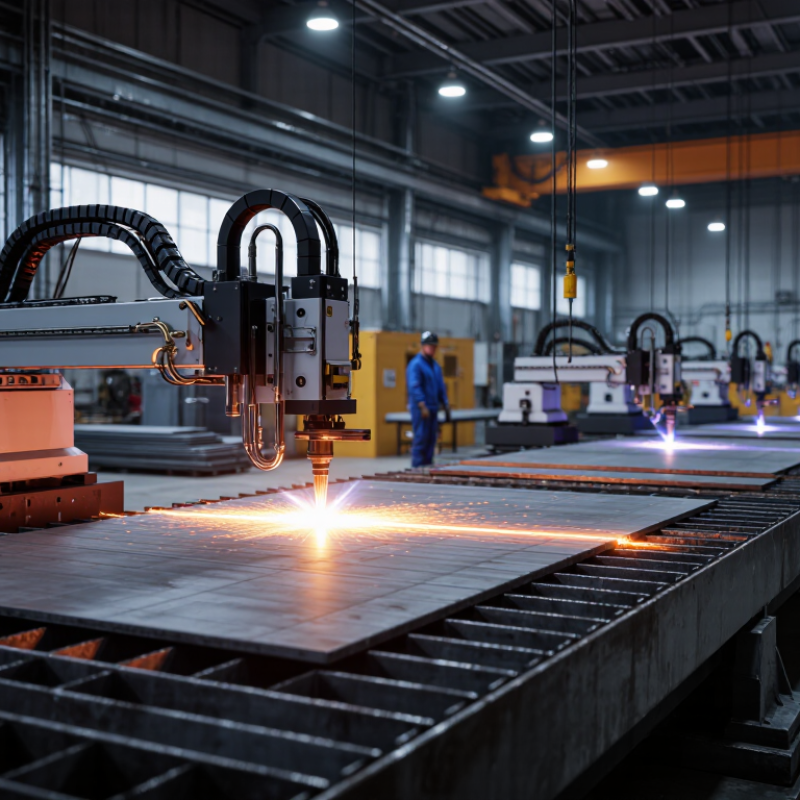
Robotic flame-cutting cells for 6–300 mm steel plate require careful classification. A cell for 6 mm plate differs greatly from one cutting 300 mm slabs. Thin plate may suit plasma or oxygen-fuel processes, while extreme thickness demands high gas capacity, rigid torch mounting, and stable preheating. The table must support heavy loads without noticeable deflection. Small errors become large dimensional problems.

Reliable manufacturers usually offer integrated cells, not only robotic arms. Look for automatic torch-height control, plate sensing, fume extraction, nesting software, and protected cable routing. Ask for cutting trials using your actual steel grades and thicknesses. Review edge quality, piercing time, kerf width, bevel accuracy, and heat distortion. A fast demonstration can hide slow loading and difficult maintenance. That matters.

Tips: Request sample parts from 6 mm, 25 mm, and 300 mm plate. Confirm gas consumption, nozzle life, table capacity, safety interlocks, and local service response. Verify operator training and spare-part availability before purchase. Keep a written acceptance test. It prevents vague promises. A useful cell should also allow manual recovery after a failed pierce, because real production is rarely perfect. Even experienced teams can underestimate heat buildup, plate scale, or warped material. Allow time for process tuning.

Quality Benchmarks: ISO 9013 Classes 1–5 and Thermal-Cut Tolerances

For global buyers, flame-cutting robot quality should be judged against ISO 9013:2017, not promotional photographs. The standard classifies thermal-cut edges from Class 1 to Class 5. Class 1 demands the tightest results, while Class 5 allows broader deviations. Tolerances depend on plate thickness, cut length, and process conditions. Ask for measured values, not “high precision” claims.

Important indicators include perpendicularity tolerance, mean height of the profile, and edge roughness. A 20 mm steel plate may show a smooth face but still fail dimensional inspection.

Trial cuts should use the buyer’s actual steel grade and thickness. They should also record nozzle condition, oxygen pressure, travel speed, and heat distortion. Small details matter.

The International Federation of Robotics reported 541,302 new industrial robot installations worldwide in 2023, showing strong automation demand. Yet automation does not automatically create ISO Class 1 edges. Poor calibration remains common. That is an uncomfortable point.

Robot manufacturers should provide repeatability data, cutting trials, inspection records, and maintenance intervals. Buyers should compare these documents with ISO 9013 tables and project tolerances. A practical acceptance test should inspect at least three positions on each cut edge, because one excellent sample proves very little.

Global Supplier Review: ISO 9001, CE, UL, and Regional Service Coverage

For global buyers, a top flame-cutting robot manufacturer must prove more than cutting speed. The International Federation of Robotics reported 541,302 industrial robots installed worldwide in 2023. This growth increases demand for traceable safety systems and dependable support. A credible supplier should provide ISO 9001 records, documented factory tests, and cutting samples using comparable steel thicknesses. Real evidence matters.

ISO 9001 shows controlled processes, not perfect cutting accuracy. The ISO Survey 2022 recorded 1,265,216 ISO 9001 certificates globally, so buyers should verify certificate scope and validity. CE marking indicates conformity with applicable European requirements; it is not a universal quality award. UL compliance also depends on the machine’s electrical design, listed components, and intended market. Ask for the technical file, risk assessment, and applicable standard references. A certificate alone is insufficient.

Regional service coverage often decides whether production stays stable. Strong suppliers maintain trained technicians, local spare-part stock, remote diagnostics, and clear response times. Confirm support for torches, drives, sensors, software, and extraction systems. Check language coverage and emergency contact channels. A 48-hour response promise sounds useful, but contract details matter more. Buyers should also test a sample program before ordering. I would not trust impressive brochures without observing edge quality, pierce consistency, and downtime records. Even experienced suppliers can underestimate installation training.

Top Flame Cutting Robot Manufacturers for Global Buyers? - Global Supplier Review: ISO 9001, CE, UL, and Regional Service Coverage

Supplier Profile Typical Flame-Cutting Capability ISO 9001:2015 Evidence CE Compliance Evidence UL / North American Readiness Regional Service Coverage Best Fit for Global Buyers
European industrial OEM Robotic oxy-fuel cutting, multi-axis positioning, plate profiling, and integration with industrial safety systems. Verify certificate
Request a current certificate, issuing body, scope, and validity dates.
Strong market fit
Request the EU Declaration of Conformity, risk assessment, technical file summary, and applicable harmonized standards.
Project-dependent
Confirm NRTL-listed components, control-panel construction, electrical documentation, and local inspection requirements.
Usually strongest in Europe; overseas support may rely on authorized partners and remote diagnostics. Buyers prioritizing documented conformity, engineering quality, and regulated-market deployment.
North American automation OEM Robotic cutting cells, heavy-plate handling, automated torch height control, and factory-floor safety integration. Verify certificate
Check whether the certificate scope covers machine design, integration, and after-sales processes.
Export option
CE documentation should be supplied when the completed machine is placed on the European Economic Area market.
Strong market fit
Ask whether the panel or complete assembly uses certification accepted by the installation authority; UL is not automatically required for every machine.
Typically strongest in the United States and Canada, with service availability depending on local offices or integrators. Fabricators requiring local commissioning, electrical support, and compliance familiarity in North America.
East Asian export OEM Cost-efficient robotic cutting platforms, gantry or articulated-arm configurations, and configurable work envelopes. Document check required
Confirm certificate authenticity, manufacturing site, certification scope, and audit status.
Confirm before order
Obtain the Declaration of Conformity and verify that it applies to the complete machine configuration, not only individual components.
Varies by configuration
Request evidence for the control cabinet, power supplies, safety devices, and any required field evaluation.
Often strongest in the domestic market; international support commonly uses distributors, remote assistance, and stocked spare parts. Buyers balancing purchase cost, customization, and acceptable lead times with a capable local integrator.
Regional system integrator Application-specific flame-cutting cells, robot programming, fixture design, safety guarding, and production-line integration. Scope may differ
Separate the integrator’s quality certificate from the robot, torch, and safety-component manufacturers’ certificates.
Useful for local compliance
The integrator may prepare the completed-cell conformity documentation when it assumes responsibility for the final assembly.
Verify locally
Confirm who is responsible for electrical approval, field inspection, lockout procedures, and safety validation.
Usually excellent within one country or nearby region, with faster on-site response than a distant factory. Buyers needing turnkey installation, operator training, production integration, and local maintenance.
Multi-region automation group Standardized robotic cutting cells, centralized engineering, digital monitoring, and coordinated multi-site deployment. Best documentation potential
Verify that the certificate covers the contracting entity and the manufacturing or integration location.
Suitable with validation
Confirm machine-specific documentation, safety validation, instructions, and language requirements for each destination.
Good multinational readiness
Request the exact approval path for each plant, including component certification and authority-having-jurisdiction requirements.
Potentially broadest coverage through subsidiaries, service centers, and trained partner networks. Large manufacturers standardizing equipment across multiple countries or production sites.
Buyer verification note: ISO 9001:2015 confirms a quality-management system when issued by an appropriate certification body; it does not certify cutting accuracy or robot performance. CE marking is the manufacturer’s declaration of conformity for applicable European requirements, while UL acceptance depends on the equipment, components, installation location, and authority having jurisdiction. Always request current, machine-specific documentation before purchase.

Buyer Selection Framework: Compare Payload, Reach, Duty Cycle, and ROI

Top Flame Cutting Robot Manufacturers for Global Buyers?

Compare Payload, Reach, Duty Cycle, and ROI

Choosing a flame cutting robot requires more than comparing catalog prices. Start with payload, including the torch, hoses, fittings, and mounting hardware. A heavier hose package can reduce practical capacity. Ask for payload charts at full arm extension, not only ideal positions.

Reach must match the largest plate and table layout. A robot may reach three meters, yet lose usable angle near corners. Request a recorded test cut using your material thickness, bevel requirements, and nesting pattern. Small details matter. Torch clearance matters too.

Duty cycle shows how long the system can operate under real thermal loads. Review rated operating hours, cooling arrangements, maintenance intervals, and recovery time after alarms. A low-cost cell may become expensive through downtime and rework. Calculate ROI from labor savings, throughput, gas use, consumables, training, service travel, and rejected parts. Include installation delays.

The spreadsheet will not tell everything. Production trials often expose awkward loading steps or poor visibility. Leave room for those findings. Also compare technical documentation, operator training, spare-part availability, and response times across regions. A supplier that explains limitations clearly is often more reliable than one promising perfect performance.