request to quote
Leave Your Message

What Is the Best Welding Material from China?

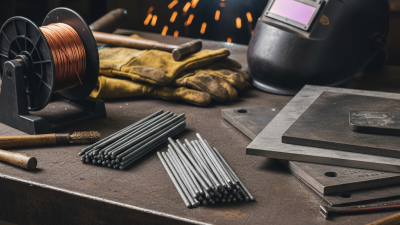
Choosing the best Welding Material from China is not simply a matter of finding the lowest price. The right choice depends on the base metal, welding process, joint design, service temperature, and required strength. A carbon steel electrode may suit structural repairs, while aluminum wire demands different storage and feeding conditions. Small differences matter.

In practical sourcing, I would examine welding wire, electrodes, flux, and filler rods separately. Their performance can change with coating quality, chemical composition, moisture control, and package sealing. Look for clear mill certificates, batch numbers, technical data sheets, and independent test reports. ISO certification can support confidence, but it does not replace product testing. AWS, ASME, or EN compliance may also matter, depending on the project and market.

Supplier experience deserves close attention. Ask how materials are stored, how batches are inspected, and whether samples can be tested before volume production. A clean spool, readable label, and stable arc are useful signs, but they are not complete proof. Not always. A polished catalog can hide weak traceability. Even experienced buyers can trust specifications too quickly. I would compare trial welds, tensile results, visual quality, and delivery consistency before naming any product the best. The strongest Chinese supplier is usually the one that matches the material to your actual application, documents its claims, and responds responsibly when results fall short. That distinction matters. There is no universal winner, only a dependable fit for a defined welding task.
What Is the Best Welding Material from China?

What Makes a Welding Material Suitable for Different Applications?

A suitable welding material is chosen by the joint, not by its country of origin. Start with the base metal: carbon steel, stainless steel, aluminium, and galvanized steel each need different filler chemistry. The filler should match required tensile strength, ductility, corrosion resistance, and service temperature. ISO 2560 classifies covered electrodes by strength, impact performance, coating type, and welding position. That detail matters beside a cold outdoor pipeline.

Process compatibility is equally important. MIG wire supports continuous production, while coated electrodes remain practical for repair work and difficult field positions. For stainless steel, excessive heat can damage corrosion resistance. For high-strength steel, uncontrolled hydrogen may cause delayed cracking. Moisture control, correct storage, shielding gas, and preheating are not minor workshop habits. They directly affect weld quality.

China’s scale also matters. The World Steel Association reported about 1.019 billion tonnes of Chinese crude steel production in 2023. This supports broad material availability, but availability does not prove suitability. AWS D1.1 requires welding procedures to match the base metal, filler classification, joint design, and inspection conditions. In practice, a sample weld should be tested before bulk purchasing. That step can expose a poor assumption. The “best” material may still fail when humidity, operator skill, or fit-up changes.

Real evidence beats a low quotation.

Which Welding Materials Are Commonly Produced in China?

China commonly produces covered electrodes, solid welding wires, flux-cored wires, filler rods, and submerged arc fluxes. These materials support construction, machinery, shipbuilding, pipelines, and general fabrication.

Mild steel electrodes remain widely available in several strength grades. Stainless steel versions serve corrosion-resistant joints and food-processing equipment. Low-hydrogen electrodes suit structural work when moisture control is critical. They need dry storage. Flux-cored wire offers high deposition rates and can improve productivity on thicker steel. However, shielding gas, welding position, and slag removal must match the wire design.

Solid welding wire is commonly used for automated or semi-automated production. Common types include carbon steel, stainless steel, aluminum, and copper alloys. TIG filler rods are also produced in many diameters and alloy grades. Submerged arc fluxes are paired with specific wires for long, continuous welds. The correct choice depends on base metal, joint design, current type, and service temperature. Not only price.

Reliable sourcing requires more than a product catalogue. Ask for batch chemical analysis, mechanical test results, dimensional checks, and applicable certification records. Packaging matters. Moisture can damage electrode performance before use. A practical review should examine wire feeding, arc stability, slag release, and weld appearance. Certificates can still contain errors. Independent verification is sensible for critical components. Some buyers overlook storage conditions and operator skill, creating problems blamed on the material. That assumption deserves careful reconsideration.

How Do Chinese Welding Materials Compare in Quality and Performance?

What Is the Best Welding Material from China?

Chinese welding materials can offer strong quality and competitive performance when buyers check production controls carefully. The best choice depends on the base metal, welding process, joint design, and service environment.

In practical shop trials, solid wire should feed smoothly, produce stable arcs, and leave limited spatter. Electrode coatings should ignite easily and remove cleanly after cooling. Flux quality matters too, especially in submerged arc welding, where moisture can increase hydrogen-related cracking risks. Many Chinese manufacturers work with GB/T, ISO, or AWS-related requirements, but similar labels do not guarantee identical performance. Always compare the actual grade, chemical composition, mechanical results, and testing method.

Batch consistency is often more important than a single excellent sample. Check mill certificates, lot numbers, packaging, storage instructions, and independent test reports. A sealed package can still suffer if transport exposes it to humidity. Small differences in wire diameter may also affect automated feeding and deposition rates. Trial welds on the real material reveal more than a catalogue.

I would not judge quality by price alone. Some lower-cost products perform reliably, while expensive materials may disappoint after poor storage. This is where buyers must stay cautious. Review weld appearance, penetration, tensile results, and operator feedback before placing a large order. Performance can be very good, but verification should never be skipped.

What Standards Should Chinese Welding Materials Meet?

Choosing the best welding material from China starts with compliance, not price. The material should match the project’s base metal, joint design, service temperature, and welding process. Chinese products may follow GB/T standards, while export projects often require ISO, AWS, EN, or ASME requirements. The applicable standard must appear clearly in the purchase specification.

Check the inspection documents carefully. A reliable batch should include a mill test certificate, heat number, chemical composition, tensile results, yield strength, and impact data when required. Welding electrodes and wires should also show diameter, classification, production date, and batch traceability. ISO 9001 supports a controlled quality system, but it does not replace product testing. ISO 3834 can provide stronger evidence of welding quality management.

Storage conditions matter too. Electrodes exposed to humidity may produce porosity, even when their certificates look correct. Drying records, sealed packaging, and warehouse temperature logs deserve attention. For critical structures, independent testing can verify composition, tensile strength, bend performance, and coating condition. A supplier should explain nonconforming product procedures without hesitation.

Small gaps remain common. Some buyers check certificates but ignore traceability after delivery. Others request an international standard without defining the exact grade or acceptance level. That creates avoidable disputes. A practical specification should state the standard, grade, dimensions, testing method, inspection level, packaging, and documentation required before shipment.

What Is the Best Welding Material from China?

Representative minimum tensile strength required by widely used welding-material classifications

The best Chinese welding material is not determined by origin alone. It should match the application and comply with the required classification, chemical composition, mechanical properties, usability tests, moisture or diffusible-hydrogen limits, dimensional tolerances, inspection procedures, and traceability requirements. The values shown are representative minimum tensile-strength requirements; buyers should also verify the applicable AWS, ISO, EN, or GB/T certificate and batch test report.

How to Choose the Best Welding Material from China?

What Is the Best Welding Material from China?

Choosing the best welding material from China starts with the application, not the lowest price. Select electrodes, welding wire, or flux according to the base metal, joint design, and welding position. Stainless steel, carbon steel, and aluminum each need different chemical properties. I once saw a low-cost wire create excessive spatter because its grade did not match the steel. The saving disappeared during rework.

Ask the supplier for mill certificates, batch numbers, chemical composition, tensile strength, and recommended storage conditions. Check whether testing follows recognized standards required in your market. A reliable supplier should provide clear technical data and answer practical questions quickly. Request samples from the actual production batch. Then test bead appearance, penetration, arc stability, and slag removal under realistic conditions. Laboratory results matter, but workshop performance matters too. I still believe small trials are often underestimated.

Tips: Compare at least three suppliers. Inspect packaging for moisture damage. Confirm diameter tolerance and delivery dates. Review the supplier’s quality-control process, not only its certificate. Ask for recent inspection records. If the material performs differently after shipment, record the welding settings, temperature, and operator experience. Some failures come from storage or technique, not the material itself. That detail is easy to miss.

What Is the Best Welding Material from China? - How to Choose the Best Welding Material from China?

The best welding material depends on the base metal, welding process, required mechanical properties, joint position, service environment, and applicable standard. The following comparison uses commonly recognized AWS/ASME classifications and typical commercial specifications.

Welding Material Common Classification Primary Process Suitable Base Metal Minimum Tensile Strength Common Diameter Range Shielding or Polarity Main Advantages Limitations Best Application
Rutile Mild Steel Electrode E6013 Manual Metal Arc Welding (SMAW) Low-carbon steel and general structural steel At least 415 MPa 2.5–5.0 mm AC or DC, usually electrode positive or negative depending on the product specification Easy arc starting, smooth appearance, low-to-moderate spatter, suitable for all-position work Not intended for the highest-strength or critical low-hydrogen applications General fabrication, repair work, light structures, gates, frames, and maintenance
Basic Low-Hydrogen Electrode E7018 Manual Metal Arc Welding (SMAW) Carbon steel and low-alloy structural steel At least 490 MPa 2.5–5.0 mm AC or DC electrode positive; electrodes should be stored and redried according to the manufacturer’s instructions Low diffusible hydrogen, strong and ductile weld metal, suitable for demanding structural joints Moisture-sensitive; requires controlled storage and correct handling Bridges, pressure-containing structures, heavy equipment, boilers, and load-bearing steelwork
Solid Carbon Steel Welding Wire ER70S-6 Gas Metal Arc Welding (GMAW/MIG/MAG) Carbon steel and mild steel At least 480 MPa 0.8–1.6 mm DC electrode positive; commonly used with argon-rich mixed gas or carbon dioxide-based shielding gas High deposition efficiency, consistent feeding, good arc stability, and clean welds on properly prepared steel Requires clean wire-feeding equipment and suitable shielding-gas flow Automated fabrication, machinery, frames, sheet metal, and medium-to-high production work
Gas-Shielded Flux-Cored Wire E71T-1 Flux-Cored Arc Welding (FCAW-G) Carbon steel and structural steel At least 480 MPa 1.2–1.6 mm DC electrode positive with external shielding gas, commonly carbon dioxide or an argon-based mixture High deposition rate, good penetration, productive outdoor and heavy-fabrication performance Produces slag that must be removed; wind can disturb external shielding gas Heavy steel fabrication, shipbuilding, construction equipment, and structural assemblies
Austenitic Stainless Steel Wire ER308L Gas Tungsten Arc Welding or Gas Metal Arc Welding (GTAW/GMAW) 304 and similar 18% chromium / 8% nickel stainless steels Typically at least 520 MPa 0.8–3.2 mm DC electrode negative for GTAW; DC electrode positive for GMAW; argon or argon-based shielding gas Good corrosion resistance, low carbon content, and good weldability on common austenitic stainless steel Not the first choice for every stainless grade or highly reducing chemical environment Food-processing equipment, tanks, pipes, kitchen equipment, and stainless-steel fabrication
Aluminum-Silicon Filler Wire ER4043 Gas Tungsten Arc Welding or Gas Metal Arc Welding (GTAW/GMAW) Many 6xxx-series aluminum alloys and selected cast aluminum alloys Typically about 165 MPa for deposited weld metal 0.8–3.2 mm AC for GTAW; DC electrode positive for GMAW; argon shielding gas is commonly used Low melting range, good fluidity, reduced cracking tendency on compatible aluminum alloys, and attractive weld appearance Lower weld strength than some aluminum-magnesium fillers; alloy compatibility must be checked Automotive parts, heat exchangers, general aluminum fabrication, and repair welding
Nickel-Chromium-Molybdenum Filler Wire ERNiCrMo-3 Gas Tungsten Arc Welding or Gas Metal Arc Welding (GTAW/GMAW) Nickel alloys, stainless steel, and selected dissimilar-metal joints Typically above 690 MPa 0.8–3.2 mm DC electrode negative for GTAW or DC electrode positive for GMAW; argon or helium-argon shielding Excellent high-temperature and corrosion resistance when correctly matched to the base material Higher material cost, slower welding speed, and greater sensitivity to joint preparation Chemical processing equipment, marine systems, power-generation components, and corrosion-resistant joints

Key Criteria for Choosing Welding Material from China

1. Verify the applicable standard
Confirm AWS, ASME, ISO, EN, or GB classification, together with the required lot traceability and certificate of conformity.
2. Match the filler to the base metal
Check chemical composition, tensile strength, yield strength, corrosion resistance, service temperature, and compatibility with dissimilar metals.
3. Review actual test documents
Request a mill test certificate or batch test report covering chemistry, mechanical properties, dimensions, coating, moisture control, and production batch number.
4. Inspect packaging and storage
Electrodes should have intact moisture-resistant packaging. Welding wire should be clean, rust-free, evenly wound, and protected from contamination.
5. Confirm welding procedure requirements
Compare the material with the qualified WPS/PQR, including current range, polarity, preheating, interpass temperature, shielding gas, and post-weld heat treatment.
6. Test before large-volume purchasing
Perform sample welding and, where required, visual, tensile, bend, impact, hardness, radiographic, or ultrasonic testing before approving a production lot.