Top Reasons to Invest in Shipbuilding Welding Robots for Enhanced Efficiency
In the competitive world of shipbuilding, efficiency is crucial. An essential innovation is the Shipbuilding Welding Robot. These robots transform traditional welding processes. They enhance speed, precision, and overall productivity.
Shipbuilding involves complex structures. Each weld must be flawless for integrity. Human welders can tire and make mistakes. In contrast, a Shipbuilding Welding Robot offers consistent quality. The precision of these machines minimizes defects. This leads to reduced rework and costs.
However, adopting this technology requires careful consideration. Initial costs are high, and staff must be trained. Some workers may resist automation. Balancing tradition with innovation is a challenge. Yet, embracing the Shipbuilding Welding Robot could redefine the future of shipbuilding. Transformation comes with risks, but the potential rewards are significant.
The Growing Demand for Automation in Shipbuilding Welding Processes
The shipbuilding industry is rapidly evolving. Automation has become a necessity in welding processes. Companies face pressure to increase efficiency and reduce costs. Employing welding robots can address these challenges. Robots deliver precise welds and enhance overall productivity. They can operate in difficult environments where human workers might struggle.
Tips: Regular maintenance of robots is essential. An unmaintained robot can lead to errors. Invest in training for staff to operate and troubleshoot these machines. This will save time and reduce downtime.
Moreover, the growing demand for skilled labor adds to the urgency for automation. There aren’t enough trained welders available. Robots can fill this gap and ensure consistent output. However, integration of automation isn't without challenges. It requires upfront investment and careful planning. Each shipyard must assess its unique needs and capabilities. Finding a balance between human skill and robotic precision is vital.
Tips: Start with a small project to test the waters. Monitor performance metrics closely. Adjust the approach based on real-world feedback. Keep communication open with the team to address any concerns.
Key Benefits of Welding Robots: Precision and Consistency in Ship Construction
Investing in shipbuilding welding robots enhances precision and consistency in ship construction. According to recent industry studies, automated welding processes reduce human error rates by up to 40%. This increase in accuracy leads to higher quality welds and less rework. In an industry where safety is paramount, consistent welding is crucial to creating sturdy vessels that withstand the rigors of the sea.
Welding robots can operate continuously, improving efficiency. They can work in challenging conditions, where human welders may struggle. Data shows that these robots can be up to four times faster than traditional methods. This speed can significantly shorten construction timelines. However, the transition to robotic systems requires planning. Workers need training to effectively collaborate with automation.
Tip: Monitor the learning curve when implementing new technologies. It’s essential to adapt workflows to mitigate disruptions. Establish feedback loops for continuous improvement. Focus on integrating robots into existing systems rather than overhauling everything at once. Remember, precision and consistency will only come with practice and patience.
Top Reasons to Invest in Shipbuilding Welding Robots for Enhanced Efficiency - Key Benefits of Welding Robots: Precision and Consistency in Ship Construction
| Benefit |
Description |
Impact on Efficiency |
| High Precision |
Welding robots provide consistent and precise welds, minimizing defects and errors. |
Reduces rework costs and time. |
| Enhanced Speed |
Robots can work continuously without fatigue, completing jobs faster than manual labor. |
Increases overall productivity and throughput. |
| Labor Cost Reduction |
Less reliance on manual labor leads to lower labor costs and fewer skilled workforce dependencies. |
Improves profit margins. |
| Consistency |
Robots maintain the same welding parameters throughout the process ensuring uniform quality. |
Enhances reliability in shipbuilding projects. |
| Reduced Safety Risks |
Welding can be hazardous; robots take on dangerous jobs, minimizing worker exposure. |
Improves workplace safety and reduces insurance costs. |
| Adaptability |
Modern welding robots can adapt to different ship designs and materials easily. |
Provides flexibility for future shipbuilding needs. |
Cost Analysis: ROI of Investing in Shipbuilding Welding Robots
Investing in shipbuilding welding robots might seem daunting. However, the return on investment justifies the initial costs. Automating welding processes can lead to notable improvements in productivity. Robots operate with precision, reducing the need for rework. Often, traditional methods cause delays, affecting overall timelines. Robots can minimize these issues and streamline operations, enhancing efficiency significantly.
Cost analysis reveals further benefits. Though the upfront expenditure can be high, savings accrue over time. Labor costs decrease as fewer workers are needed for welding tasks. Additionally, robots can operate continuously, ensuring maximum output. Maintenance costs are manageable, as modern technology often incorporates durability features. In the long term, the ROI from reduced labor and increased efficiency can be substantial.
It's important to reflect on potential challenges. Initial training for staff will be necessary. Additionally, integrating robots into existing workflows might create disruptions. Ensuring that the transition is smooth requires careful planning. Invest in flexibility; some tasks may still need human oversight. Balancing automation with skilled labor is critical for success.
Impact of Welding Robotics on Production Speed and Efficiency Metrics
Welding robotics have transformed shipbuilding efficiency.
According to a report by the International Federation of Robotics (IFR), automation can enhance production speed by up to 30%. Such a significant increase means meeting deadlines more easily.
Shipyards using robotic systems manage to produce vessels quicker than before.
The accuracy of welding robots minimizes defects. A study by the American Welding Society indicates that automation reduces error rates in shipbuilding by 50%. This leads to fewer reworks and materials wasted.
A reduction in waste also contributes to environmental sustainability. However, labor costs and initial investments can be a concern.
Training workers to collaborate with robots remains a challenge. Understanding each robotic function is vital.
The transition can lead to anxiety among staff. Nonetheless, successful integration can result in an impressive leap in overall productivity.
Data shows that firms that embraced this technology saw a measurable increase in profit margins.
Robots in shipbuilding are moving forward, yet human oversight is still crucial for optimal results.
Case Studies: Successful Integration of Welding Robots in Shipyards Worldwide
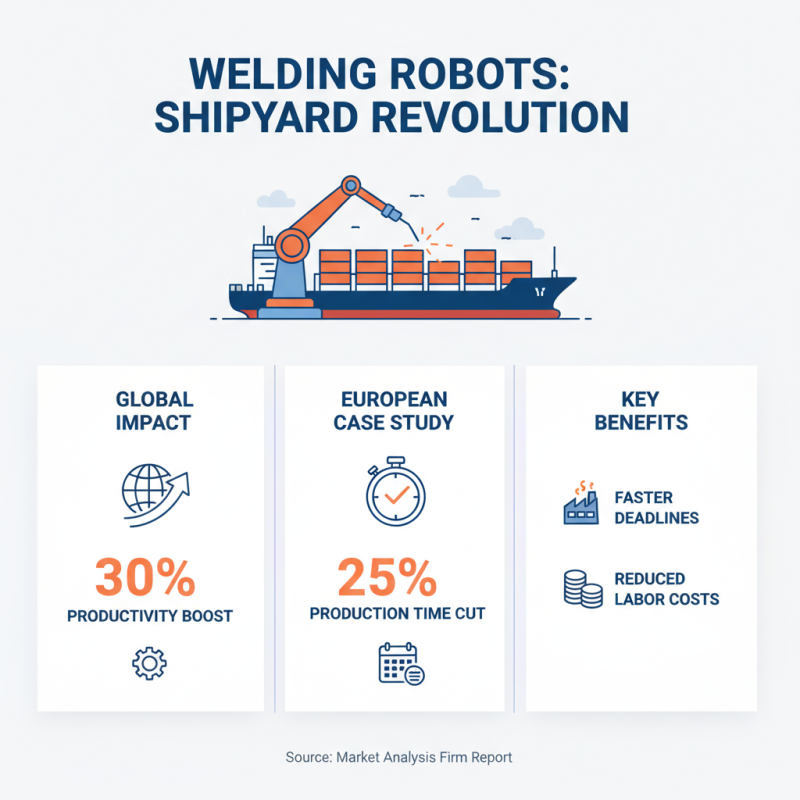
In shipyards worldwide, welding robots are transforming the industry. A report from a leading market analysis firm indicates that robotic welding can increase productivity by up to 30%. Many shipyards have embraced this technology, witnessing substantial improvements. Consider a case from a European shipyard where the integration of robotic welding cut production time by 25%. This allowed them to meet strict deadlines while reducing labor costs.
However, the transition isn't without challenges. Some operators express concerns over the initial cost of implementation. Training staff to work alongside robotics requires time and investment. In North America, a shipyard faced setbacks during their integration phase, as workers initially struggled with the new technology. Their experience highlights an important lesson: change takes patience. Proper training and gradual transitions can help mitigate these issues.
A compelling example comes from Asia, where a shipyard reduced welding defects by 45% after adopting robotic systems. Automation improved accuracy and consistency in weld quality. Yet, reliance on technology can lead to complacency. Continuous monitoring and skilled supervision are essential for maintaining standards. The successful integration of welding robots presents significant benefits, but human oversight remains crucial.