request to quote
Leave Your Message

Top 10 High Precision Robot Suppliers Worldwide

Precision is becoming a purchasing requirement, not merely a technical advantage. The International Federation of Robotics reported 541,302 industrial robots installed worldwide in 2023. It also recorded more than 4.28 million robots operating globally. These figures show a demanding market for repeatability, uptime, and controlled motion.

This article examines ten influential suppliers of High Precision Robot systems, including FANUC, ABB, Yaskawa, KUKA, Epson, Stäubli, Kawasaki Robotics, Nachi-Fujikoshi, Universal Robots, and OMRON. Their solutions serve automotive welding, electronics assembly, pharmaceutical handling, laboratory automation, and precision machining. A robot arm may place a tiny connector, polish a metal edge, or repeat a millimetre-level movement thousands of times daily. Small errors become expensive quickly.

The ranking considers technical capability, global service coverage, application range, integration support, and published reliability information. ISO 9283 provides a useful framework for evaluating robot positioning accuracy and repeatability. However, supplier comparisons are not perfectly uniform. Manufacturers often publish different test conditions, payloads, and cycle times. That limitation deserves attention. A compact SCARA robot may outperform a larger six-axis model in electronics assembly, while the larger system may handle heavier tools more effectively. Interact Analysis and IFR market studies also indicate continued automation demand, but market growth does not guarantee equal performance from every supplier. Buyers should verify samples, maintenance response, software compatibility, and total operating cost before selecting equipment. Precision looks impressive on a datasheet. Factory results matter more.
Top 10 High Precision Robot Suppliers Worldwide

Definition and Criteria for High-Precision Robot Suppliers

High-precision robot suppliers are defined by measurable performance, not impressive advertising. Their systems should repeatedly reach programmed positions within a narrow tolerance. Accuracy, repeatability, stiffness, vibration control, and motion resolution all matter. These terms are related, but they are not interchangeable.

A credible supplier provides test conditions, measurement methods, and results from controlled environments. Ask how precision changes with payload, speed, temperature, and operating hours. A robot holding a 0.01-millimeter tolerance in a laboratory may perform differently beside a hot machining cell. Look for calibration records, traceable instruments, documented quality procedures, and independent compliance evidence. Practical experience matters too. Engineers should explain maintenance intervals, alignment checks, software updates, and recovery after unexpected stoppages.

Service capability is another important criterion. Response time, spare-part availability, training, and local technical support can protect production accuracy over several years. A useful evaluation includes a sample task, such as placing components into a tight fixture repeatedly during an extended shift. Record drift, cycle time, surface vibration, and rejected parts.

No supplier is flawless. A specification sheet cannot reveal every factory condition. That is worth questioning. Buyers should request application trials and compare measured results with promised limits. The strongest suppliers accept difficult questions, disclose operating boundaries, and improve designs when field evidence exposes weaknesses. Reliability is earned through transparent data and consistent performance, not through precision claims alone.

Top 10 High Precision Robot Suppliers Worldwide

Definition and Criteria for High-Precision Robot Suppliers

This chart presents an editorial evaluation framework rather than a supplier ranking. The criteria reflect precision metrics and operating factors commonly assessed under ISO 9283, including positioning accuracy, repeatability, path performance, stabilization behavior, calibration, and environmental reliability. The percentages indicate recommended evaluation weightings and do not represent company-specific performance data.

Global Market Landscape and Key Industry Applications

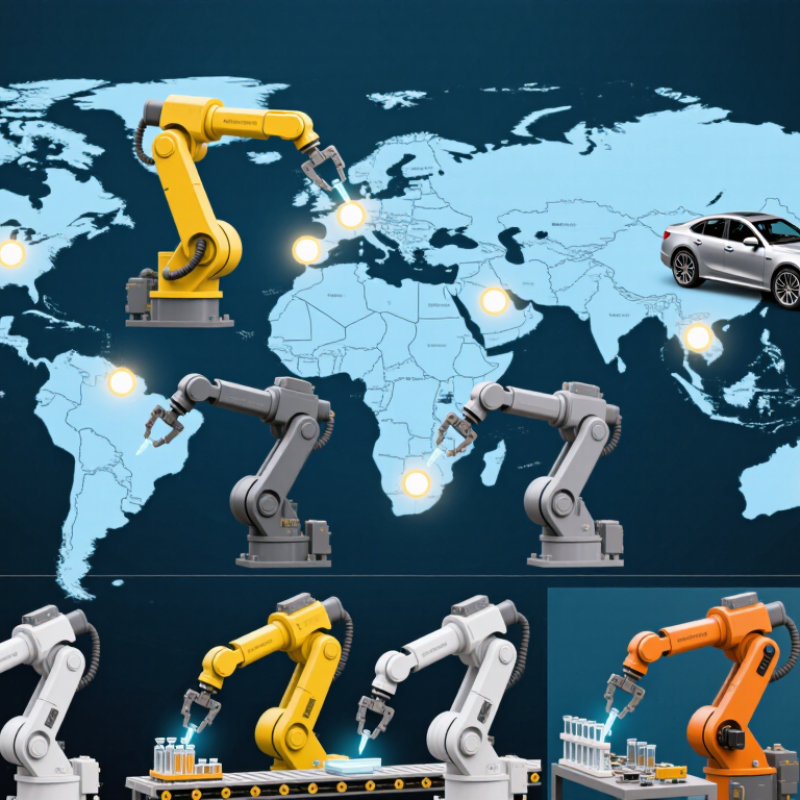
High-precision robot suppliers now compete through accuracy, uptime, software integration, and service coverage. Across the global market, the leading ten suppliers serve different production cultures and technical needs. A practical top-ten assessment should examine repeatability, payload control, motion smoothness, safety design, and lifecycle support. Accuracy data alone can mislead. Cycle stability, calibration records, and spare-part access often determine factory results. During factory audits, engineers inspect cable routing, joint temperature, and recovery time after a fault. These details reveal manufacturing discipline. Regional strengths differ. Asian suppliers often support dense electronics production, while European and North American suppliers focus strongly on automotive, aerospace, and industrial systems. The ranking also needs transparent testing methods, because marketing figures rarely describe dusty floors or uneven workloads.

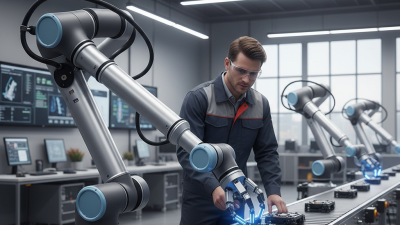
High-precision robots support many applications. Automotive plants use them for welding, sealing, inspection, and precise component handling. At a battery line, stable motion helps position delicate cells without unnecessary pressure. In electronics factories, compact arms manage tiny parts under strict contamination controls. Medical manufacturing demands traceability, repeatable force, and carefully documented processes. Warehouses use robotic systems for sorting, packaging, and pallet movement. Food facilities require washable designs and reliable operation near moisture. Energy projects apply robots to inspection, assembly, and hazardous maintenance tasks. Installation conditions matter. Even the best robot may underperform with poor tooling, weak calibration, or unsuitable programming. Some published comparisons also overlook technician training. Real performance depends on the whole system, not the arm alone. There is room for more independent testing.

Top 10 High-Precision Robot Suppliers Worldwide

Top 10 High-Precision Robot Suppliers Worldwide

High-precision robot suppliers now serve electronics, medical devices, automotive, and laboratory production. The International Federation of Robotics reported 541,302 industrial robot installations worldwide in 2023. Its World Robotics 2024 report also recorded more than 4.2 million robots operating globally. These figures show strong demand, but volume does not guarantee precision.

541,302
industrial robot installations worldwide in 2023.
4.2 million+
robots operating globally.

A reliable supplier should provide repeatability data under defined payload, speed, temperature, and maintenance conditions. ISO 9283 testing offers a useful comparison framework. Look for documented positioning accuracy, calibration methods, controller stability, and service response times. A robot repeating a 0.02-millimeter path in a clean factory may perform differently beside vibration, heat, or dust. Precision is not everything. Integration matters.

Tips: Request sample test reports before purchasing. Check performance at your actual payload, not an ideal laboratory load. Review spare-parts availability and local training support. Ask how accuracy changes after long operating cycles. The World Robotics report indicates continued automation growth, yet supplier rankings remain imperfect because applications differ widely. A compact assembly robot may outperform a larger model in delicate work, while a heavy-duty system may deliver better stability. Measure twice. Then compare total operating cost, software usability, safety compliance, and documented field experience.

Technology, Accuracy, and Product Portfolio Comparison

Top 10 High Precision Robot Suppliers Worldwide

Technology, Accuracy, and Product Portfolio Comparison

A practical comparison of ten leading robot suppliers should begin with measurable performance, not reputation alone. Engineers often inspect repeatability, positioning accuracy, cycle time, and controller response. These figures matter on a factory floor. A small error can misalign a connector or damage a delicate component.

Modern systems combine high-resolution encoders, vibration control, digital twins, and force sensing. Vision-guided robots improve placement when parts arrive with slight variations. Advanced motion software also reduces overshoot during rapid direction changes.

However, published accuracy data can hide testing conditions. Results may change with payload, temperature, arm extension, and maintenance quality.

Real experience reveals these differences quickly. A robot may perform beautifully in a laboratory, then struggle beside a hot machining cell. That gap deserves attention. The strongest suppliers usually offer articulated, SCARA, delta, collaborative, and specialized clean-environment models. Their portfolios support assembly, welding, packaging, inspection, and material handling. Integration tools, spare parts, training, and remote diagnostics are equally important.

No ranking is perfectly objective. A supplier with exceptional precision may provide fewer gripper options. Another may offer broad software support but weaker local service. Buyers should compare complete operating costs, not only purchase prices. Factory trials remain essential. Watching a robot repeat a 0.1-millimeter movement for several hours can reveal more than a polished brochure.

Selection Factors for Buyers and Future Industry Trends

Top 10 High Precision Robot Suppliers Worldwide

Selecting among the top ten high precision robot suppliers requires more than comparing repeatability figures. Buyers should verify accuracy under real loads, temperatures, cable routing, and continuous cycles. A laboratory result may not match a machining cell. Ask for calibration records, ISO 10218 compliance, safety validation, and documented failure intervals. Request a sample path test using your own workpiece. That detail matters. According to the International Federation of Robotics’ World Robotics 2024 report, factories installed 541,302 industrial robots in 2023. Operational stock reached 4.28 million units. This scale expands supplier choice, but complicates service comparison.

Evaluate the complete ownership model: controller openness, spare-part availability, training, software updates, and local engineering response. A low purchase price can become expensive when a replacement encoder waits six weeks. Use measurable criteria, including recovery time, energy use per cycle, process capability, and five-year maintenance cost. Demand cybersecurity controls and clear data ownership for connected production lines. Independent acceptance testing is valuable. Still, teams often overvalue brochure precision and undervalue operator training.

Future purchasing will reflect wider automation growth. The same IFR report identifies Asia as the leading installation region, with about 70% of new deployments in 2023. Suppliers are adding vision, force sensing, digital twins, and AI-assisted programming. These tools may shorten commissioning, yet they introduce validation duties. NIST’s AI Risk Management Framework recommends documented testing, monitoring, and human oversight. No scorecard is perfect. Buyers should pilot one demanding task, measure results, and revise the shortlist before scaling.

Top 10 High Precision Robot Suppliers Worldwide - Selection Factors for Buyers and Future Industry Trends

Anonymized supplier comparison based on publicly available product specifications, global market presence, application coverage, service capability, and high-precision automation relevance.

Rank Anonymized Supplier Profile Primary Market Base High-Precision Robot Portfolio Typical Repeatability Typical Payload Range Typical Reach Range Precision-Oriented Applications Quality & Compliance Factors Buyer Selection Strength Key Future Trend Alignment
1 Supplier Profile A
Global industrial automation group
East Asia with worldwide production and service coverage Six-axis articulated, SCARA, delta, collaborative, and palletizing robots ±0.01–0.03 mm 0.5–700 kg 250–3,200 mm AutomotiveElectronicsMachine tending ISO 9001-based quality systems; broad safety documentation; established preventive-maintenance programs Large installed base, extensive integrator network, and strong lifecycle support AI-assisted programming, digital twins, energy monitoring, and vision-guided manipulation
2 Supplier Profile B
European precision-automation specialist
Western Europe with global distribution High-speed six-axis, SCARA, delta, and cleanroom-compatible robots ±0.01–0.02 mm 0.5–500 kg 300–2,900 mm SemiconductorsMedical devicesPackaging Strong traceability, controlled-manufacturing options, functional-safety documentation, and industry-specific validation support High motion accuracy, fast cycle times, and mature engineering software Cleanroom automation, adaptive gripping, low-carbon production, and connected maintenance
3 Supplier Profile C
Japanese high-reliability robot manufacturer
Japan with broad Asian, European, and North American operations Articulated, SCARA, delta, collaborative, and heavy-payload systems ±0.02–0.05 mm 1–1,000 kg 300–3,700 mm WeldingAssemblyFoundry Documented reliability testing, safety-rated controllers, global spare-parts systems, and application engineering Robustness in demanding environments and broad payload coverage Robotic cells with predictive analytics, autonomous error recovery, and human-machine collaboration
4 Supplier Profile D
European flexible-manufacturing provider
Central Europe with strong global integrator partnerships Six-axis, SCARA, delta, collaborative, and mobile-manipulation platforms ±0.02–0.04 mm 0.5–600 kg 400–3,100 mm General manufacturingFoodLogistics CE-oriented safety engineering, ISO-based production controls, simulation tools, and modular cell design Flexible deployment, offline programming, and strong systems-integration capability Mobile robots, cloud-connected fleets, no-code programming, and flexible production cells
5 Supplier Profile E
North American industrial robotics supplier
North America with international sales and service channels Articulated, collaborative, SCARA, palletizing, and material-handling robots ±0.02–0.05 mm 0.5–800 kg 400–3,900 mm AerospaceAutomotiveMetalworking Strong machine-safety support, application testing, training programs, and North American service coverage Good fit for large production lines and complex integrated cells Reshoring automation, AI vision, weld-process monitoring, and workforce-assistance tools
6 Supplier Profile F
Asian value-engineered automation supplier
East Asia with expanding international distribution Six-axis, SCARA, delta, collaborative, and compact assembly robots ±0.02–0.05 mm 0.5–500 kg 300–2,800 mm ElectronicsBatteriesConsumer goods ISO 9001-based production, standardized controller platforms, safety certification support, and competitive spare-parts availability Competitive total cost of ownership and short deployment cycles Smart factories, localized supply chains, machine vision, and energy-efficient servo systems
7 Supplier Profile G
Collaborative-robot and digital-automation specialist
Europe and Asia with global software-led distribution Collaborative arms, lightweight articulated robots, mobile platforms, and cobot accessories ±0.02–0.05 mm 3–30 kg 500–1,900 mm SME productionAssemblyInspection Collaborative-operation risk assessments, safety functions, simplified programming, and partner-certified tooling Fast installation, low floor-space requirements, and accessible operator training Generative programming, force control, AI inspection, and autonomous task setup
8 Supplier Profile H
High-speed motion-control specialist
Japan and Asia-Pacific with global technology partnerships SCARA, delta, Cartesian, six-axis, and precision assembly robots ±0.005–0.02 mm 0.1–200 kg 150–2,000 mm Micro-assemblyOpticsElectronics High-resolution servo control, calibration procedures, cleanroom options, and detailed motion-performance data Excellent choice for high-speed, repeatable, small-part operations Sub-millimeter inspection, advanced calibration, compact cells, and edge analytics
9 Supplier Profile I
Industrial robot and turnkey-cell provider
Europe with multinational project delivery capability Articulated, palletizing, welding, painting, and integrated production cells ±0.02–0.06 mm 3–800 kg 500–3,500 mm WeldingPaint finishingMaterial handling Application-specific validation, risk assessment, process documentation, and turnkey commissioning Strong project execution for complete automated lines rather than standalone robots Closed-loop process control, virtual commissioning, and robotic inspection
10 Supplier Profile J
Emerging connected-robotics supplier
Asia with growing European and North American channel coverage Collaborative, SCARA, articulated, palletizing, and mobile robot platforms ±0.02–0.06 mm 3–500 kg 400–3,000 mm WarehousingPackagingLight assembly Safety certification availability varies by model; buyers should verify local compliance, cybersecurity, and service capability Attractive pricing, rapid product development, and flexible software interfaces Robotics-as-a-service, fleet management, 5G connectivity, and AI-based workflow optimization
Buyer selection factors: verify repeatability under the actual payload and reach, cycle-time performance, controller and communication compatibility, safety certification in the target market, IP and cleanroom ratings, calibration support, spare-parts availability, integrator competence, cybersecurity, training, and total cost of ownership. Specification ranges are representative industry values and should be confirmed against the selected model and application.