What is Aerospace Welding and Why is it Important for Aircraft Manufacturing?
Aerospace welding is a critical process in aircraft manufacturing. It involves joining metal components that endure extreme conditions. This technique ensures structural integrity and reliability in aerospace applications. The quality of welds impacts safety and performance.
Mastering aerospace welding requires specialized skills and knowledge. Welders must understand the unique materials used in aircraft, such as titanium and aluminum alloys. Advanced techniques like laser welding and electron beam welding are often employed. Each method presents its own challenges and benefits.
In this highly regulated field, adherence to strict standards is essential. Imperfect welds can lead to catastrophic failures. Therefore, ongoing training and quality control are paramount. Aerospace welding not only demands technical expertise but also a commitment to excellence and safety.
Definition of Aerospace Welding and Its Key Processes
Aerospace welding is a specialized field focused on joining materials used in aircraft manufacturing. This process ensures the structural integrity and performance of components in flight. Key techniques include
TIG (Tungsten Inert Gas) welding,
MIG (Metal Inert Gas) welding, and
laser welding. Each method has specific applications and benefits, depending on the materials used.
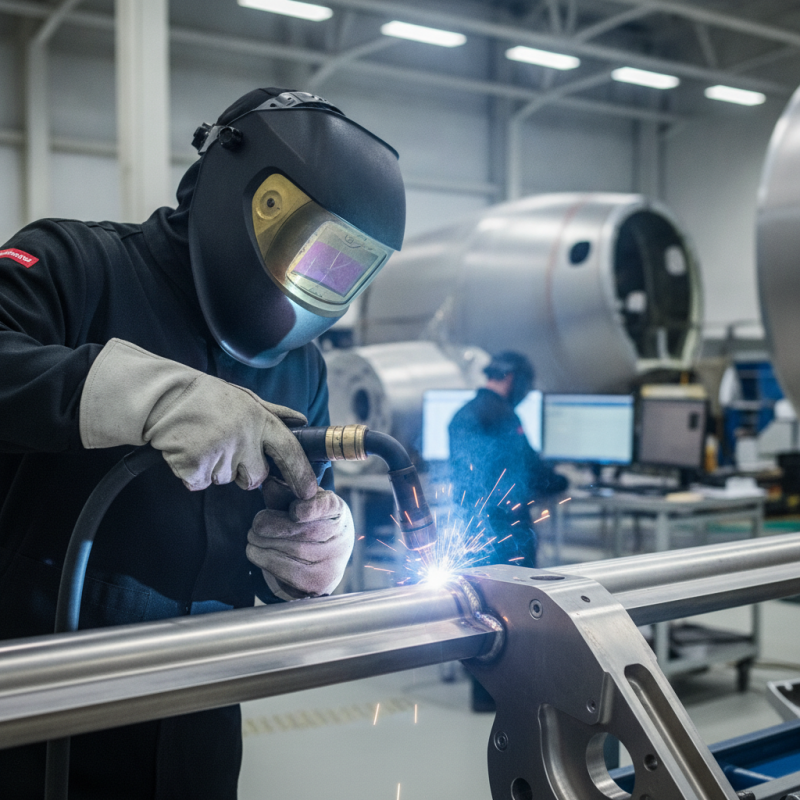
TIG welding is commonly employed for aluminum and titanium. It offers precise control, making it ideal for intricate components.
MIG welding, on the other hand, is faster and suited for thicker materials, providing a solid bond.
Laser welding offers high-speed, high-precision capabilities, especially for complex assemblies. Understanding the distinctions among these methods is critical for selecting the right approach.
Tip: Always prioritize safety when working with welding equipment. Use appropriate protective gear, including helmets and gloves, to prevent injuries.
Another crucial aspect is the preparation of the materials. Clean surfaces prevent contamination that could compromise weld quality. Poor preparation can lead to defects, necessitating rework that delays production.
Tip: Conduct regular training sessions for welders. Keeping skills sharp ensures high-quality output and builds team confidence in their craft.
Importance of Aerospace Welding in Aircraft Structural Integrity
Aerospace welding plays a critical role in ensuring the structural integrity of aircraft. According to the Federal Aviation Administration (FAA), nearly 30% of aircraft maintenance issues arise from welding defects. It emphasizes the need for precise techniques in aerospace welding to avoid costly failures. Professionals in the industry must follow stringent standards to ensure that the materials used—often aluminum and titanium—meet strict safety regulations. Welding inconsistencies can lead to catastrophic failures during flight.
The significance of aerospace welding extends beyond basic assembly. A recent study from the International Journal of Aerospace Engineering indicates that over 70% of aerospace structures depend on welded joints for their strength. Each weld must be meticulously inspected and tested for quality. Despite advancements in technology, welding defects still occur. These can arise from human error, environmental factors, or inexperienced welders. Continuous training and proper certification are essential to address these imperfections.
Moreover, the complexity of modern aircraft demands innovative welding techniques. The shift towards lightweight materials introduces challenges. For instance, the melting points of some alloys vary greatly, complicating the welding process. A comprehensive understanding of material science and welding methodologies is crucial. As the industry evolves, so must the skills and knowledge of those involved in aerospace welding. Constant improvement is needed to stay ahead of potential risks.
Common Welding Techniques Used in Aerospace Manufacturing
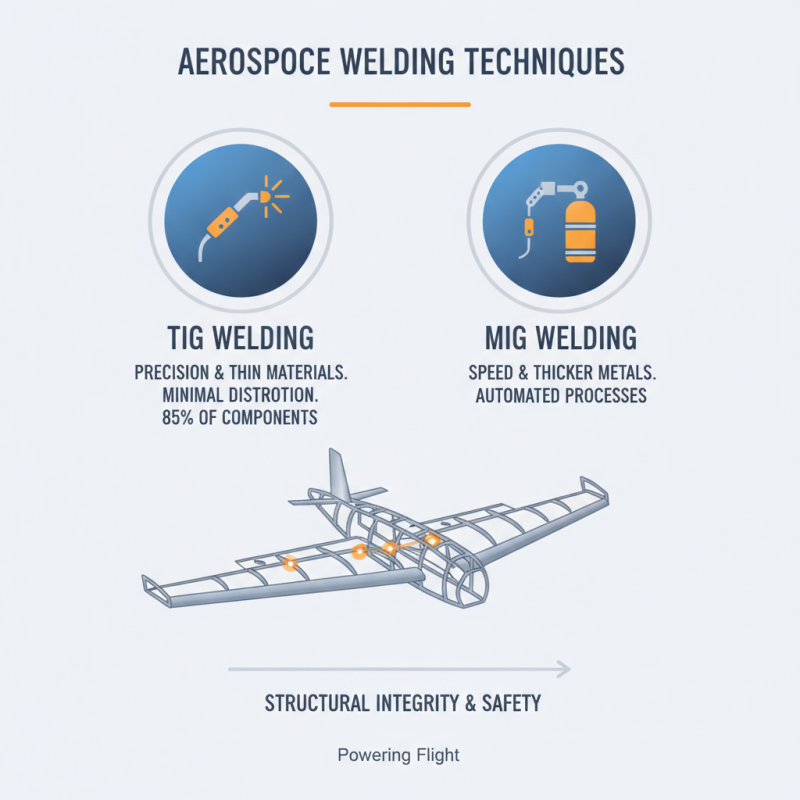
Aerospace manufacturing relies heavily on specialized welding techniques. These methods ensure structural integrity, safety, and performance in aircraft. Common techniques include tungsten inert gas (TIG) and metal inert gas (MIG) welding. TIG welding offers precision, ideal for thin materials. Manufactured components often require minimal distortion, which TIG effectively delivers. Reports indicate that 85% of aerospace components use TIG for their delicate requirements.
MIG welding is more efficient for thicker materials. It handles larger projects with speed, making it suitable for mass production. This technique accounts for approximately 60% of the welding process in commercial aircraft manufacturing. However, welders need to be skilled, as the quality can vary. Inconsistent results are reflective of operator experience and technique.
Laser welding is another emerging method. It provides deeper penetration and reduced heat input. Yet, it is costly and demands specialized training. Industry data show that while laser welding enhances precision, it represents only 10% of welding operations currently. Companies must balance the cost and benefits of adopting new technologies in welding.
Quality Control Measures in Aerospace Welding
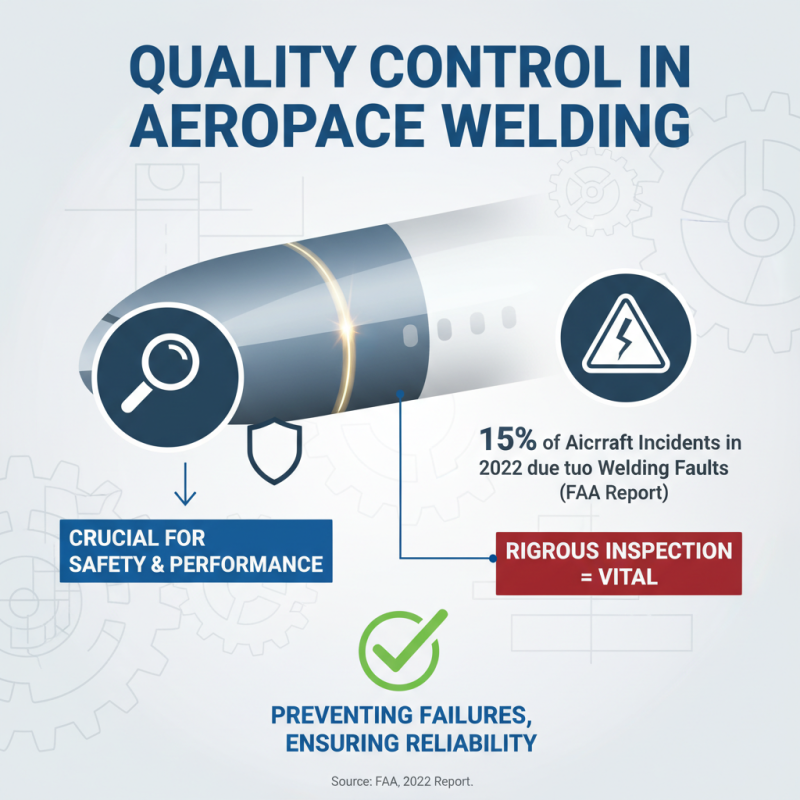
Aerospace welding plays a crucial role in aircraft manufacturing. Effective quality control measures ensure safety and performance. In 2022, the Federal Aviation Administration (FAA) reported that welding faults contributed to 15% of aircraft incidents. Thus, rigorous inspection processes are vital.
One key measure in aerospace welding is the Non-Destructive Testing (NDT) method. This includes ultrasonic and radiographic testing. These techniques allow for the detection of inconsistencies without damaging the components. According to industry data, implementing NDT improves defect detection rates from 50% to over 90%.
Tips for quality control include regular training for welders. Staying updated on the latest techniques is essential. Additionally, using standardized procedures can reduce errors significantly. Quality assurance should not only check after the weld. It should start from material selection and continue throughout the process, enhancing overall reliability. Regular audits might highlight unaddressed issues, promoting continuous improvement in practices.
Challenges and Innovations in Aerospace Welding Technology
Aerospace welding faces unique challenges. The extreme temperatures and pressures in flight require precision. According to a recent industry report, about 70% of all aerospace components are welded. This process ensures integrity and performance across the aircraft's lifespan.
Innovations in welding technology play a crucial role. Additive manufacturing, for instance, has emerged as a game changer. It facilitates the creation of lighter, stronger parts. However, it also presents challenges in quality control. Companies report that 30% of new weld techniques fail initial inspections. Addressing these issues is vital for safety and efficiency.
Training is another area needing attention. Skilled welders are in high demand but are scarce. Industry experts stress the need for updated training programs. Approximately 25% of current welders are nearing retirement age. Ensuring a new generation is ready is essential for the future of aerospace manufacturing. As innovations progress, the importance of skilled labor will only increase.
What is Aerospace Welding and Why is it Important for Aircraft Manufacturing? - Challenges and Innovations in Aerospace Welding Technology
| Dimension |
Description |
Importance |
| Material Types |
Commonly used materials include titanium, aluminum, and steel. |
Selection of suitable materials ensures safety and performance. |
| Welding Techniques |
TIG (Tungsten Inert Gas), MIG (Metal Inert Gas), and laser welding. |
Innovative techniques lead to stronger and lighter structures. |
| Quality Control |
Includes non-destructive testing and inspection methods. |
Ensures reliability and compliance with aviation standards. |
| Challenges |
Issues like heat distortion, cracking, and fatigue. |
Addressing challenges leads to enhanced durability of aircraft. |
| Innovations |
Advanced automation and robotic welding technologies. |
Reduces human error and improves precision in welding processes. |
| Future Trends |
Increased use of hybrid materials and sustainability practices. |
Innovations contribute to environmentally friendly manufacturing. |