Top 10 Shipbuilding Welding Robots to Boost Your Production?
As the maritime industry evolves, the demand for efficiency in shipbuilding has never been greater. A comprehensive report from the International Maritime Organization indicates that shipyard productivity is crucial for maintaining competitiveness. Investing in automation technologies, particularly Shipbuilding Welding Robots, can drastically improve production rates and quality.
Dr. William Carter, a leading expert in marine robotics, notes, "The integration of welding robots into shipbuilding processes not only enhances precision but also minimizes human error." This statement reflects the growing consensus in the industry. Welding robots are designed to tackle repetitive tasks with speed and accuracy. However, not all shipbuilding welding solutions are created equal.
While the benefits are evident, challenges remain. Many shipyards struggle with integrating these advanced systems into existing workflows. Proper training and maintenance are vital for maximizing their potential. Identifying the best Shipbuilding Welding Robot for your operations can lead to significant improvements, but careful consideration is essential. The right choice can significantly impact productivity and operational success.
Overview of Shipbuilding Welding Robots
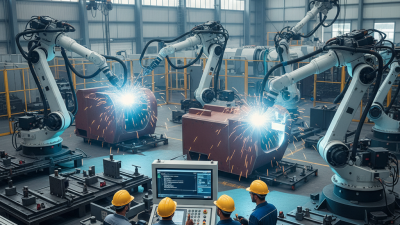
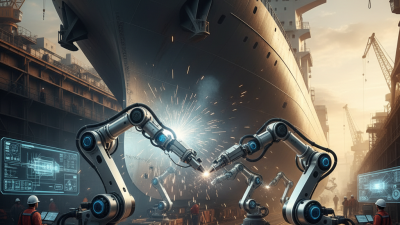
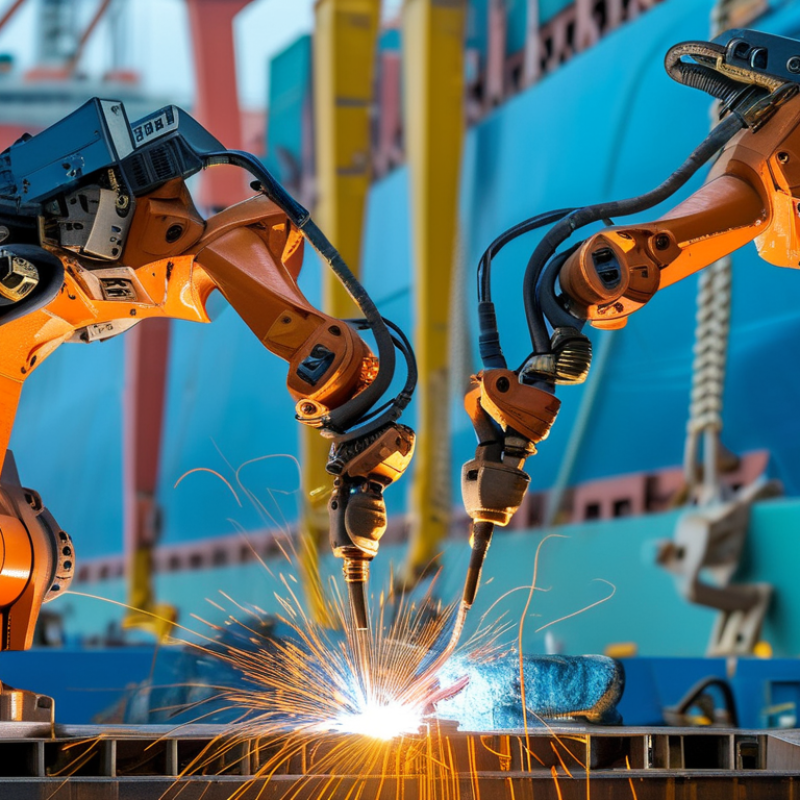
Shipbuilding welding robots have transformed the industry. Their precision and efficiency significantly enhance production capabilities. These machines seamlessly automate complex welding tasks. Operators now rely on robots to handle repetitive and labor-intensive activities. This shift allows skilled workers to focus on more critical areas of shipbuilding.
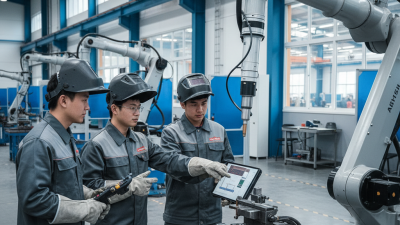
The technology behind these robots is advancing rapidly. Modern shipbuilding welding robots incorporate artificial intelligence. They can adapt to various welding processes and materials, which increases flexibility. However, the integration of robotics comes with challenges. Training staff to work alongside these machines is essential but often overlooked. Ensuring that humans and robots collaborate effectively can maximize productivity and minimize errors.
Cost is another factor to consider. Initial investments may be high, but the long-term benefits often outweigh them. Performance metrics should be regularly reviewed. Companies must assess whether the robots meet production goals consistently. Over time, if maintenance and adaptability are neglected, performance can decline. Continuous evaluation is vital for realizing the full potential of shipbuilding welding robots.
Top 10 Shipbuilding Welding Robots to Boost Your Production
| Model |
Payload Capacity (kg) |
Welding Type |
Reach (mm) |
Precision (mm) |
Automation Level |
| Robot A |
200 |
MIG |
1500 |
0.5 |
Fully Automated |
| Robot B |
220 |
TIG |
1600 |
0.4 |
Semi-Automated |
| Robot C |
180 |
Plasma |
1400 |
0.6 |
Fully Automated |
| Robot D |
230 |
Flux-Cored |
1700 |
0.7 |
Semi-Automated |
| Robot E |
240 |
MIG |
1800 |
0.3 |
Fully Automated |
| Robot F |
200 |
TIG |
1600 |
0.5 |
Semi-Automated |
| Robot G |
210 |
Plasma |
1500 |
0.6 |
Fully Automated |
| Robot H |
220 |
Flux-Cored |
1700 |
0.4 |
Semi-Automated |
| Robot I |
240 |
MIG |
1800 |
0.3 |
Fully Automated |
| Robot J |
210 |
TIG |
1600 |
0.5 |
Semi-Automated |
Key Features of Top Welding Robots for Shipbuilding
In recent years, the shipbuilding industry has increasingly turned to welding robots to enhance efficiency and precision. These robots are equipped with advanced features tailored for heavy-duty applications. A key aspect is their ability to perform multi-axis movements, which allows them to weld in hard-to-reach areas. This capability significantly reduces human error, fostering consistency in weld quality.
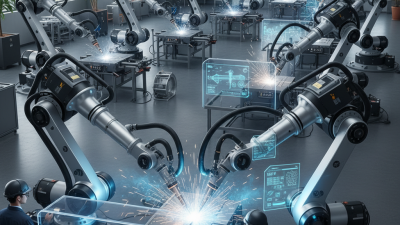
Another significant feature is the integration of sensors and artificial intelligence. These technologies enable real-time monitoring and adjustments during the welding process. As a result, the robots can adapt to various materials and thicknesses, optimizing performance for different ship components. However, the initial setup time and calibration for these systems can be a challenge. Operators must invest time and training to ensure smooth operation.
Moreover, many welding robots now support automated programming. This allows for quick reconfiguration between different projects. Such flexibility can be invaluable in a fast-paced shipbuilding environment. Yet, the reliance on automation also raises questions about job displacement. Striking a balance between leveraging technology and maintaining a skilled workforce remains a topic of discussion in the industry.
Comparison of Popular Shipbuilding Welding Robots
In the competitive world of shipbuilding, selecting the right welding robot is crucial. Many options exist, each with unique features tailored for marine applications. When choosing, consider factors like precision, speed, and usability. Ensure that the robots can handle diverse materials like steel and aluminum. Some robots excel in intricate joints, while others focus on speed and efficiency in larger structures.
The user interface of welding robots varies widely. Some offer advanced programming options, while others prioritize simplicity. User-friendly systems are essential for quick training. Robust safety features are necessary, especially in industrial environments. Additionally, check the adaptability of robots to different ship designs and construction techniques. Each model comes with its strengths and weaknesses. Some might perform well in tight spaces, but struggle with extensive tasks. Understanding these nuances is vital for effective production increase.
Impact of Welding Robots on Production Efficiency
Welding robots have revolutionized the shipbuilding industry. They enhance production efficiency significantly, transforming traditional methods. These machines can execute precise welds, reducing errors and increasing reliability. Human welders, while skilled, are often susceptible to fatigue. Robots maintain consistent performance throughout the day, ensuring production timelines are met.
The integration of welding robots also addresses safety concerns. By taking on dangerous tasks, these robots protect human workers from hazards. However, the implementation process is not without challenges. Initial costs can be high, and workers may need retraining. This transition period can be difficult for some teams. A well-planned approach is necessary to overcome these hurdles.
Not all shipbuilding companies have readily adopted this technology. Resistance to change is common. Some may doubt the effectiveness of robots in complex welding tasks. There is a learning curve that must be acknowledged. Evaluating the long-term benefits against the short-term difficulties is crucial. Embracing the capabilities of welding robots can lead to significant improvements in production, but careful consideration is needed.
Impact of Welding Robots on Production Efficiency
Future Trends in Shipbuilding Robotics Technology
The shipbuilding industry is evolving rapidly, with robotics playing a critical role. Welding robots are becoming essential for enhancing efficiency and precision. These machines can work tirelessly, reducing the time taken for crucial tasks. This shift not only boosts production rates but also improves safety, as workers are less exposed to hazardous environments.
Future trends indicate a significant rise in automation. Collaborative robots, or cobots, are emerging as vital tools. They can work alongside human workers, enhancing productivity while minimizing errors. This collaboration could reshape workflows in shipbuilding facilities. Additionally, advancements in AI and machine learning will allow these robots to adapt to unique tasks in real time. The potential for increased customization in ship design presents a new horizon for shipbuilders.
However, there are challenges to address. Integrating these technologies requires significant investment and training. The workforce must adapt to this automated landscape, fostering a culture that embraces innovation. Manufacturers need to ensure that quality remains consistent amid these changes. As robotics continues to push boundaries, a thoughtful approach will be vital to future success in shipbuilding.